UGC Ad Templates: 10 Ecommerce Scripts and Briefs
A phone-shot video is not automatically authentic, and a fill-in script is not automatically filmable. Effective UGC-style advertising begins with a buyer belief and ends with footage, claims, rights, disclosures, and edits that can withstand review.
These ten templates are production packages: hook options, timed beats, shots, B-roll, on-screen text, proof notes, CTA, creator instructions, and one controlled variation. Commissioned creator advertising is UGC-style content, not an organic customer recommendation, and the relationship must be handled transparently.
Quick answer: Choose the format by what the buyer must believe, then brief a truthful demonstration or explanation. Confirm evidence, paid usage, and disclosure before filming; test alternate hooks without rewriting the entire story.
Copy-and-Use UGC Ad Templates for Ecommerce
A usable template includes spoken beats, shots, B-roll, on-screen text, proof notes, CTA, rights, and disclosure instructions. That package turns an idea into something a creator and editor can execute consistently.
UGC ad templates are not shortcuts for fake authenticity. They are reusable creative structures for turning real product moments, creator explanations, customer proof, and everyday use cases into ads that feel native to the feed.
Why it works: The viewer recognizes themselves before they process the product.
Example: "I thought I needed a designer for better ad creative. Then I tried editable Meta ad templates."
What to test: Contrarian hook strength, proof type, educational vs. direct-response tone.
They can work well when the product benefits from demonstration, proof, texture, fit, comparison, or creator explanation.
Start with belief to establish, then verify available evidence before scripting a claim. The product demo format can feel conversational without pretending a paid relationship is an unsolicited customer moment.
The deliverable is a production package, not a hook list: script beats, shots, B-roll, on-screen text, evidence, disclosure, rights, CTA, and a controlled variant.
| Creator package | Required detail | Risk check |
|---|---|---|
| Hook | Two speakable openings tied to the buyer problem | Does either imply an unsupported personal experience? |
| Shots | Product action, B-roll, and on-screen text | Can the footage demonstrate the spoken claim? |
| Evidence | Approved claim language and source | Is the result typical, qualified, and substantiated? |
| Rights and disclosure | Paid usage, edit rights, term, channels, and disclosure | Are creator and third-party permissions documented? |
Confirm current requirements in FTC Endorsement Guides FAQ. Use the source for platform or compliance facts, while keeping performance conclusions tied to your own account evidence.
Choose a UGC Format by What Buyers Must Believe
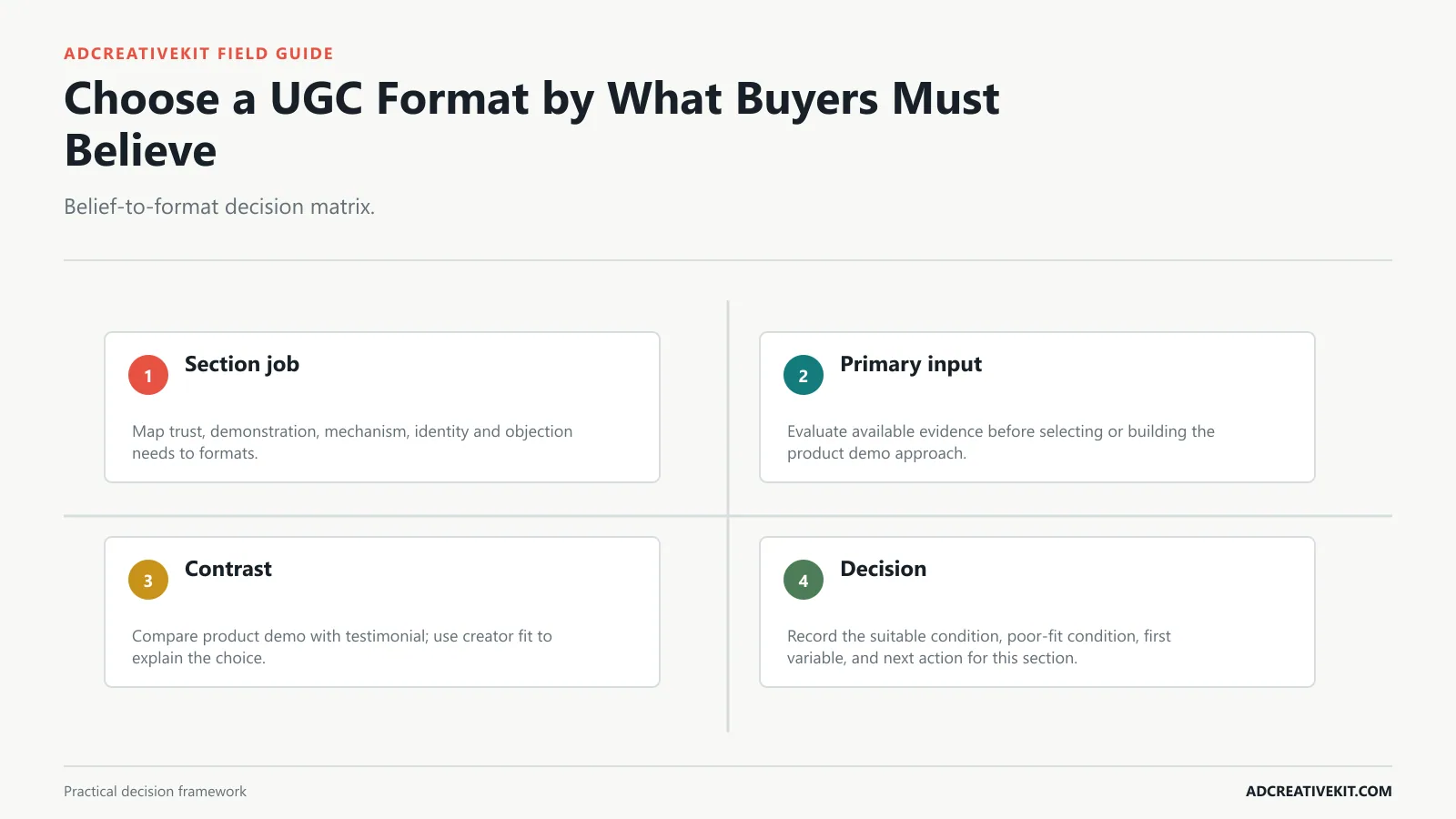
Select the format by the belief to establish. Demonstration addresses mechanism, a qualified testimonial addresses trust, comparison addresses choice, and an objection story addresses a documented hesitation.
Effective UGC-style ecommerce ads are not effective because they look messy. When the format works, the opening feels relevant, the product appears with context, the proof is credible, and the CTA matches the next step. This guide provides ten production-ready UGC ad templates with script structures, ecommerce examples, testing mechanics, risk checks, and repurposing ideas.
Example: "Still making Meta ads from scratch every launch? I use editable templates to get three test-ready versions out in one sitting."
Layout: Review screenshot, creator context, product in use, concrete outcome, CTA.
Example: "Before launching a Meta ad: hook, product visual, benefit, proof, CTA."
Yes. Founders, team members, customers with permission, or designed static layouts can use the same script structures.
Start with available evidence, then verify creator fit before scripting a claim. The testimonial format can feel conversational without pretending a paid relationship is an unsolicited customer moment.
Put the creator brief, footage requirements, and editor notes in one handoff so the spoken claim and visible proof reinforce each other.
Demonstrate checklist
- Give the creator two hook options for product demo.
- Translate available evidence into a shot the viewer can inspect.
- List evidence and prohibited overstatements.
- Confirm creator fit, usage rights, and disclosure before filming.
The Five-Part UGC Script Structure
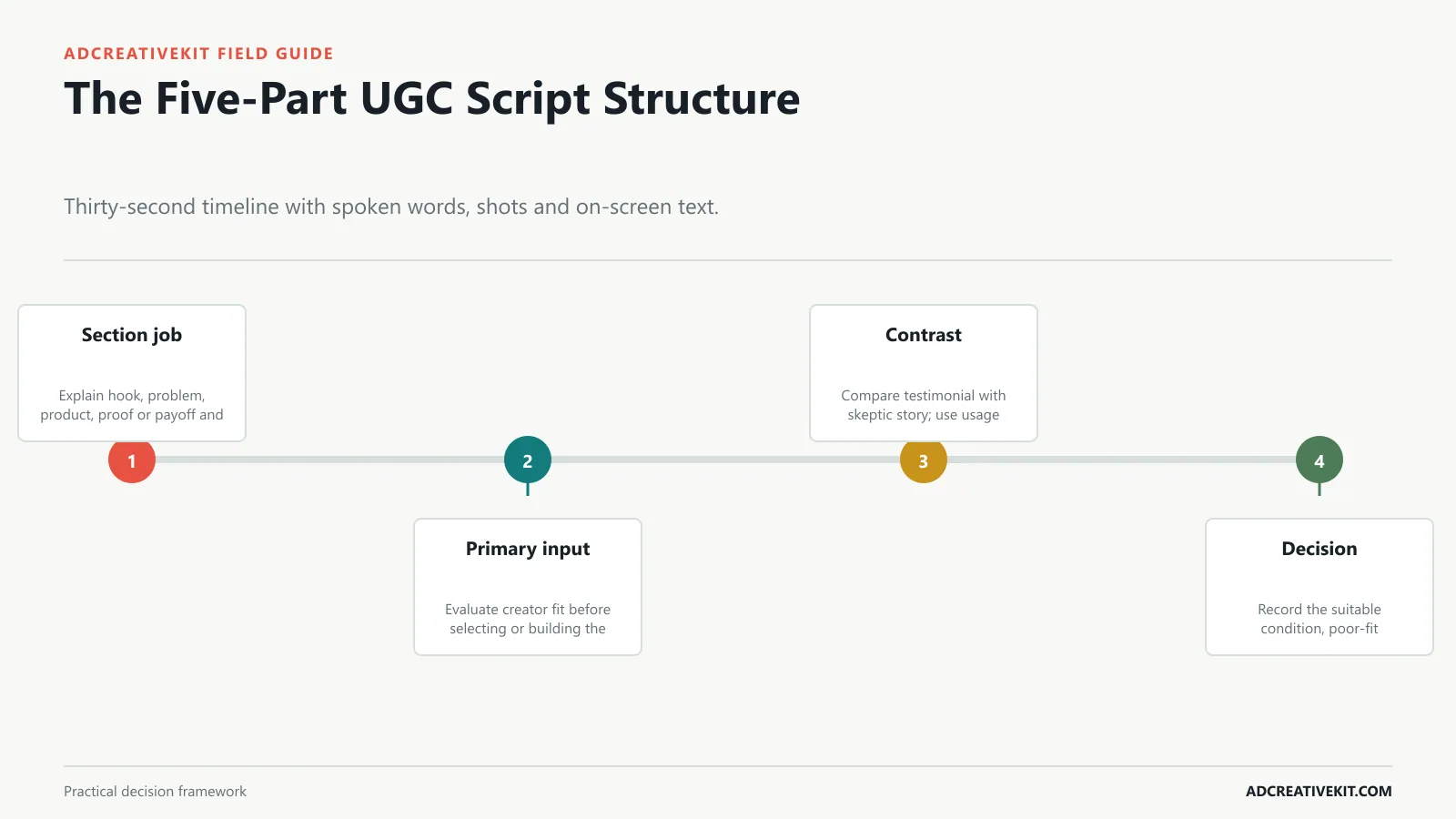
Use the five beats as a flexible sequence: relevant hook, recognizable situation, product moment, evidence or payoff, and accurate next step. Give the creator room to preserve natural speech without changing substantiated claims.
TL;DR: Test problem-solution, product demo, testimonial, skeptic story, unboxing, first reaction, comparison, before-and-after, tutorial, and objection-handling templates. Start with three to five templates, isolate one variable per test, and turn winners into editable campaign assets.
Example: "I tried five travel bottles before my last trip. This is the only one that did not leak."
Example: "I bought this because of the reviews. Now I get why people keep talking about it."
What to test: Five-point vs. three-point checklist, creator readout vs. text-led static.
Start with three templates and three hooks per template for one offer. That gives a useful nine-creative batch without making results impossible to read.
Start with creator fit, then verify usage rights before scripting a claim. The skeptic story format can feel conversational without pretending a paid relationship is an unsolicited customer moment.
Distinguish organic customer content, commissioned creator work, brand-directed UGC-style ads, and synthetic media; the rights and disclosure analysis is not interchangeable.
Problem-Solution and Product-Demo Templates
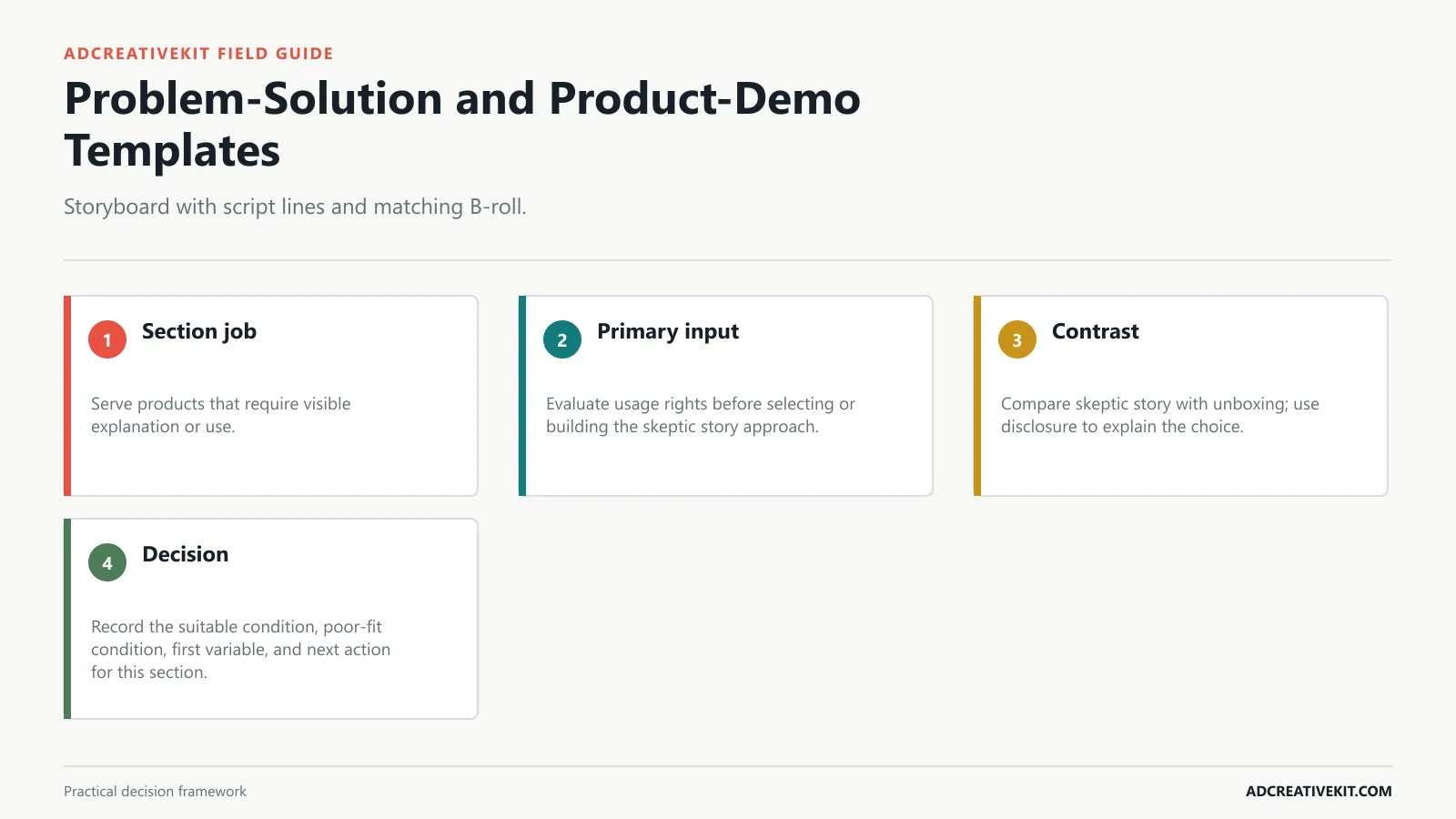
Problem-solution scripts should make the problem recognizable without exaggerating it. Product-demo scripts should show the action or mechanism clearly enough that the footage itself carries part of the proof.
UGC ad templates are repeatable scripts and visual structures for creator-style ads. They define the hook, scene, product moment, proof, and CTA before the ad is filmed or designed. A template can be used for real customer UGC, paid creator content, founder-led clips, product demos, or UGC-style static ads.
Best for: visual transformation, organization, design, beauty, home, and productivity.
Example: "Three reasons I use ecommerce ad templates: faster launches, cleaner offers, easier testing."
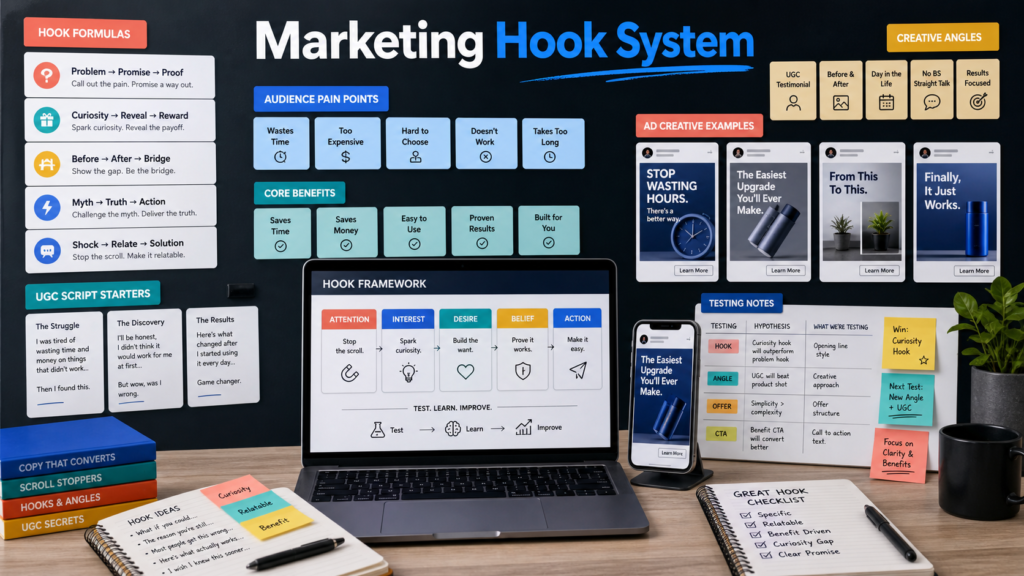
For hook planning, pair these scripts with marketing hook formulas, then turn supported concepts into editable ad templates.
Reuse the winning hook, proof, or objection in static ads, carousel cards, retargeting reminders, landing page sections, and email copy.
Start with usage rights, then verify disclosure before scripting a claim. The unboxing format can feel conversational without pretending a paid relationship is an unsolicited customer moment.
Document paid usage, edit rights, whitelisting or partnership-ad permissions, term, territory, and prohibited claims before filming.
Invite checklist
- Give the creator two hook options for skeptic story.
- Translate usage rights into a shot the viewer can inspect.
- List evidence and prohibited overstatements.
- Confirm the disclosure, usage rights, and evidence before filming.
Testimonial and Skeptic-Story Templates
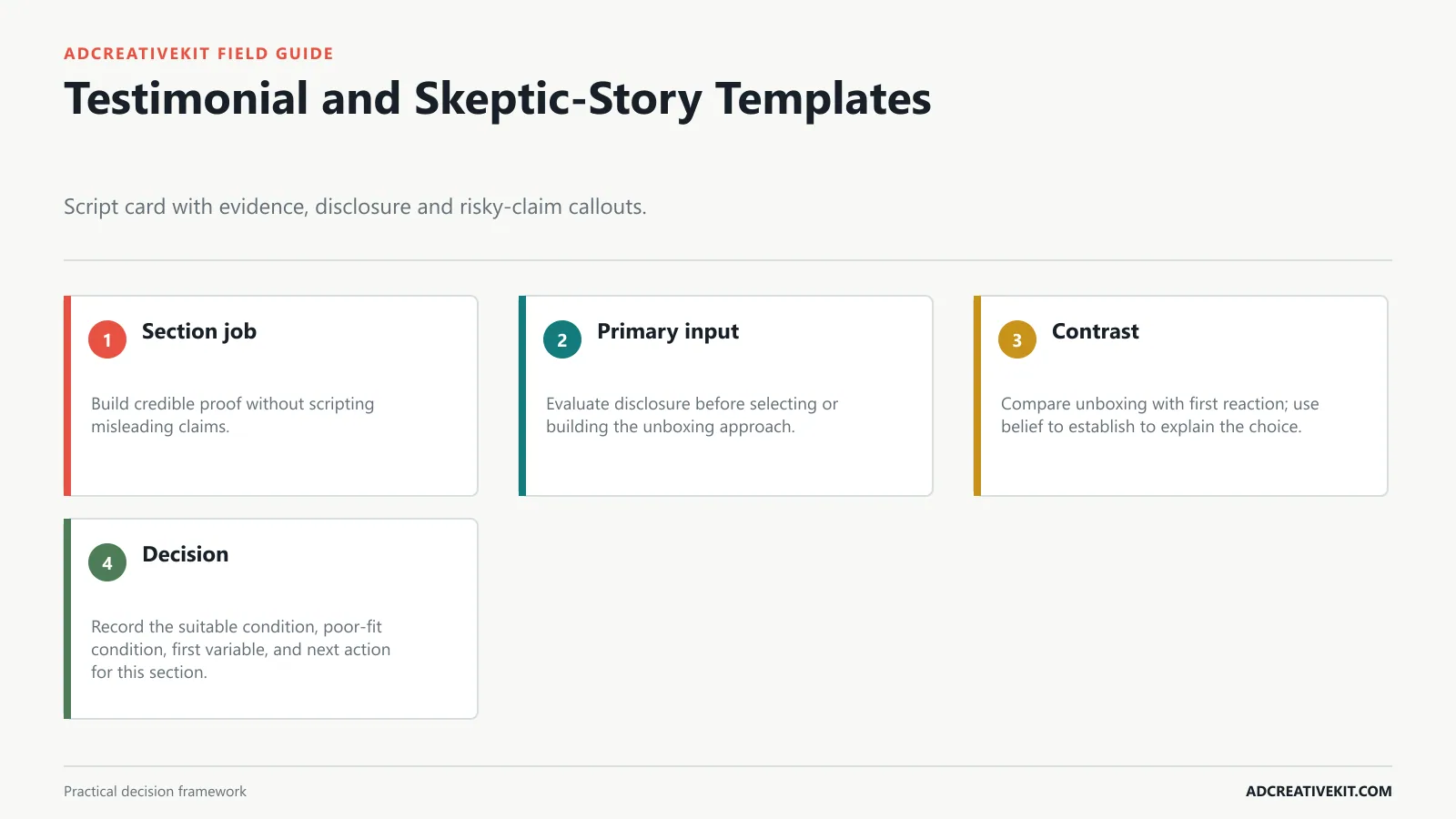
A testimonial must reflect the speaker’s honest experience, while a skeptic story should explain what changed the speaker’s view. Neither format permits a brand to invent an experience for a creator to perform as personal history.
Organic UGC originates with customers. Commissioned creator content and brand-directed UGC-style ads may use similar visual conventions, but their commercial relationship should be described accurately. Either way, the content must be honest, permission-based, and clear about claims.
Why it works: Contrast communicates the result faster than explanation.
Best for: tools, templates, beauty, food, home, software, and creator products.
Start with one product, one audience, and one offer. Pick three templates for the same product, keep the offer and landing page constant, then create three hook variations per template.
Start with disclosure, then verify belief to establish before scripting a claim. The first reaction format can feel conversational without pretending a paid relationship is an unsolicited customer moment.
Hold the script body and offer comparable when testing hooks; otherwise the team learns which package won, not what the opening changed.
Unboxing and First-Reaction Templates
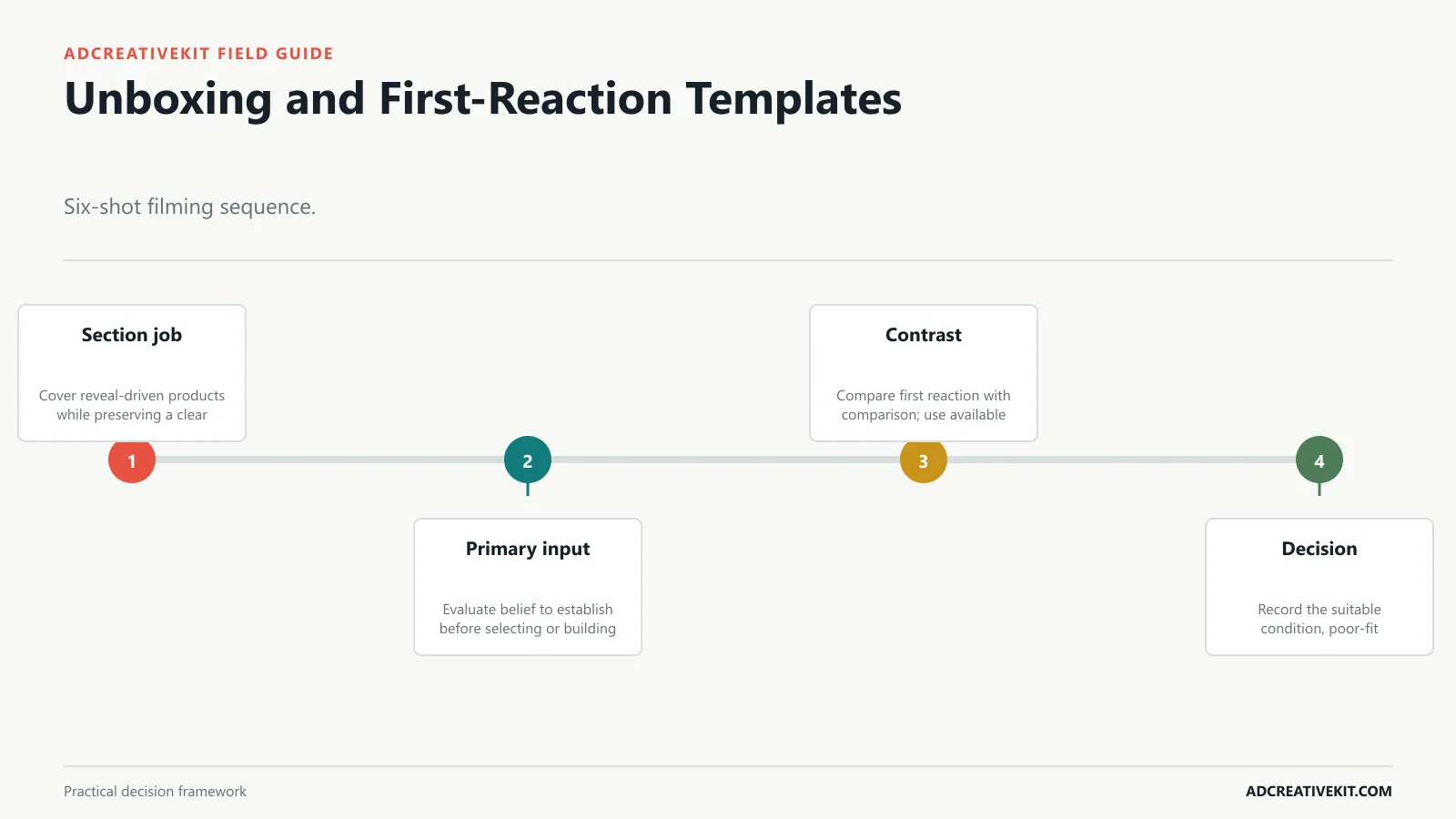
Unboxing can establish packaging, size, components, and first-use expectations. A first reaction should be genuine; if the scene is reenacted or directed, do not present it as an unsolicited discovery.
UGC-style ads lower ad resistance because they look closer to content people already choose to watch. But format alone is not enough. The ad still needs a strong first frame, a concrete reason to believe, and a product moment that explains value quickly.
Example: Before: cluttered campaign creative. After: clean UGC-style static ad with sharper hook and CTA.
Example: "How to turn one product photo into three Facebook ad creatives in 10 minutes."
High attention with weak click-through can indicate a disconnect between the opening and the body or offer. Strong clicks with weak acquisition economics can indicate post-click, price, offer, audience-quality, or tracking problems. Treat these patterns as diagnostic clues and confirm them with page and account evidence.
Start with belief to establish, then verify available evidence before scripting a claim. The comparison format can feel conversational without pretending a paid relationship is an unsolicited customer moment.
Connect each timed beat to a shot the creator can capture; spoken claims should not outrun what the footage or evidence can show.
Demonstrate checklist
- Give the creator two hook options for first reaction.
- Translate belief to establish into a shot the viewer can inspect.
- List evidence and prohibited overstatements.
- Confirm available evidence, usage rights, and disclosure before filming.
Connect this step to the marketing hook formulas so the decision survives the handoff from concept to campaign and post-click experience.
Comparison and Before-After Templates
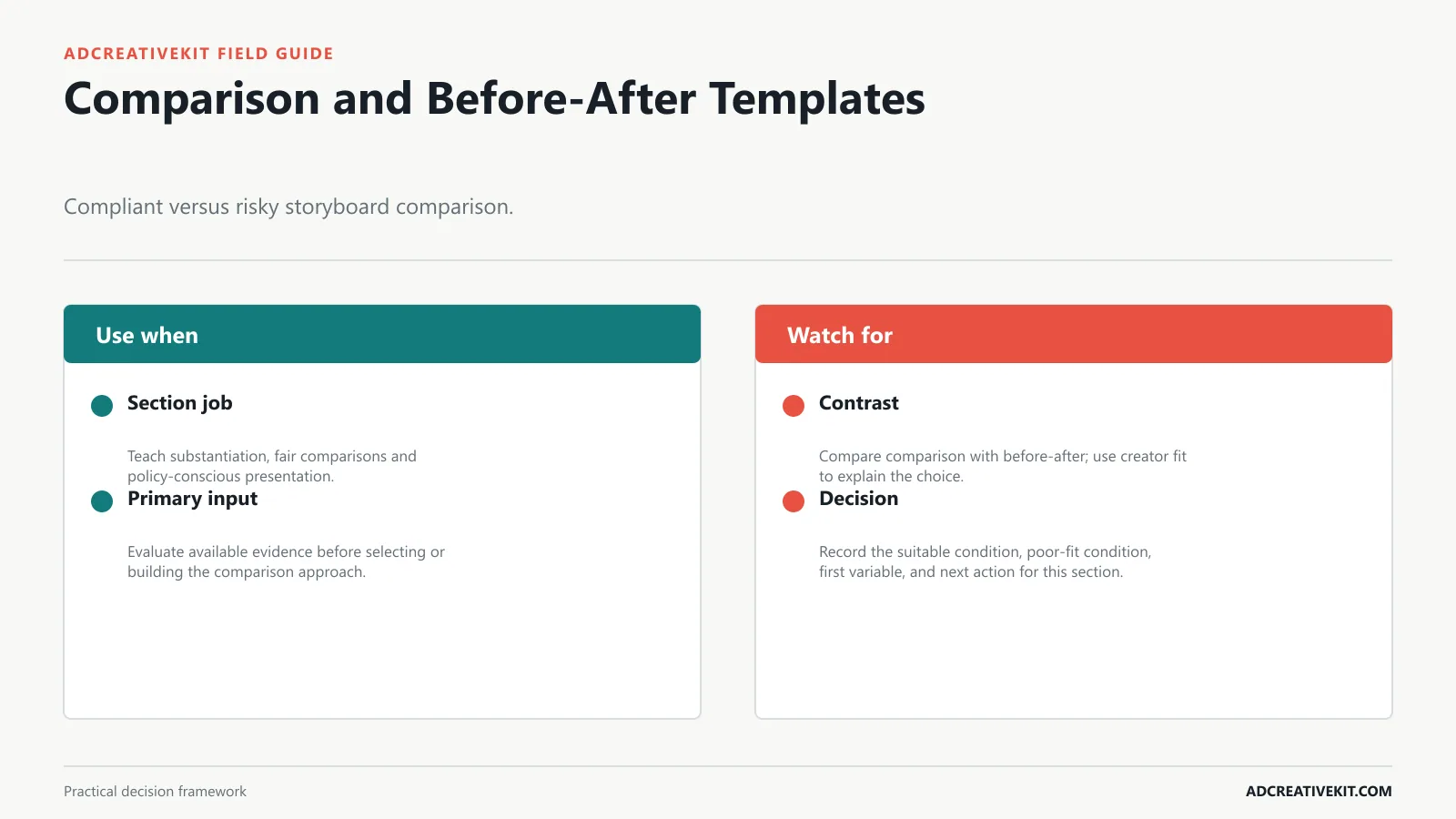
Comparison and before-after stories need consistent conditions, fair criteria, and evidence for the implied result. Show what changed and avoid editing that hides a material limitation.
For ecommerce, UGC templates are useful because they show products in context: size, texture, use, fit, routine, packaging, unboxing, comparison, or daily life.
Example: "Here is exactly how I use this when I need to launch three ad variations fast."
Example: Open a campaign bundle, scroll through ad templates, choose one, edit the headline.
Performance note: UGC templates help with creative structure and production speed, but they do not guarantee ROAS, purchases, reach, approvals, or profitability. Use real claims, permission-based proof, and platform-compliant disclosures.
Start with available evidence, then verify creator fit before scripting a claim. The before-after format can feel conversational without pretending a paid relationship is an unsolicited customer moment.
Treat demonstrations as evidence only for what viewers can actually observe, and qualify outcomes that depend on user conditions.
Confirm current requirements in FTC Disclosures 101. Use the source for platform or compliance facts, while keeping performance conclusions tied to your own account evidence.
Write a Creator Brief That Sounds Natural
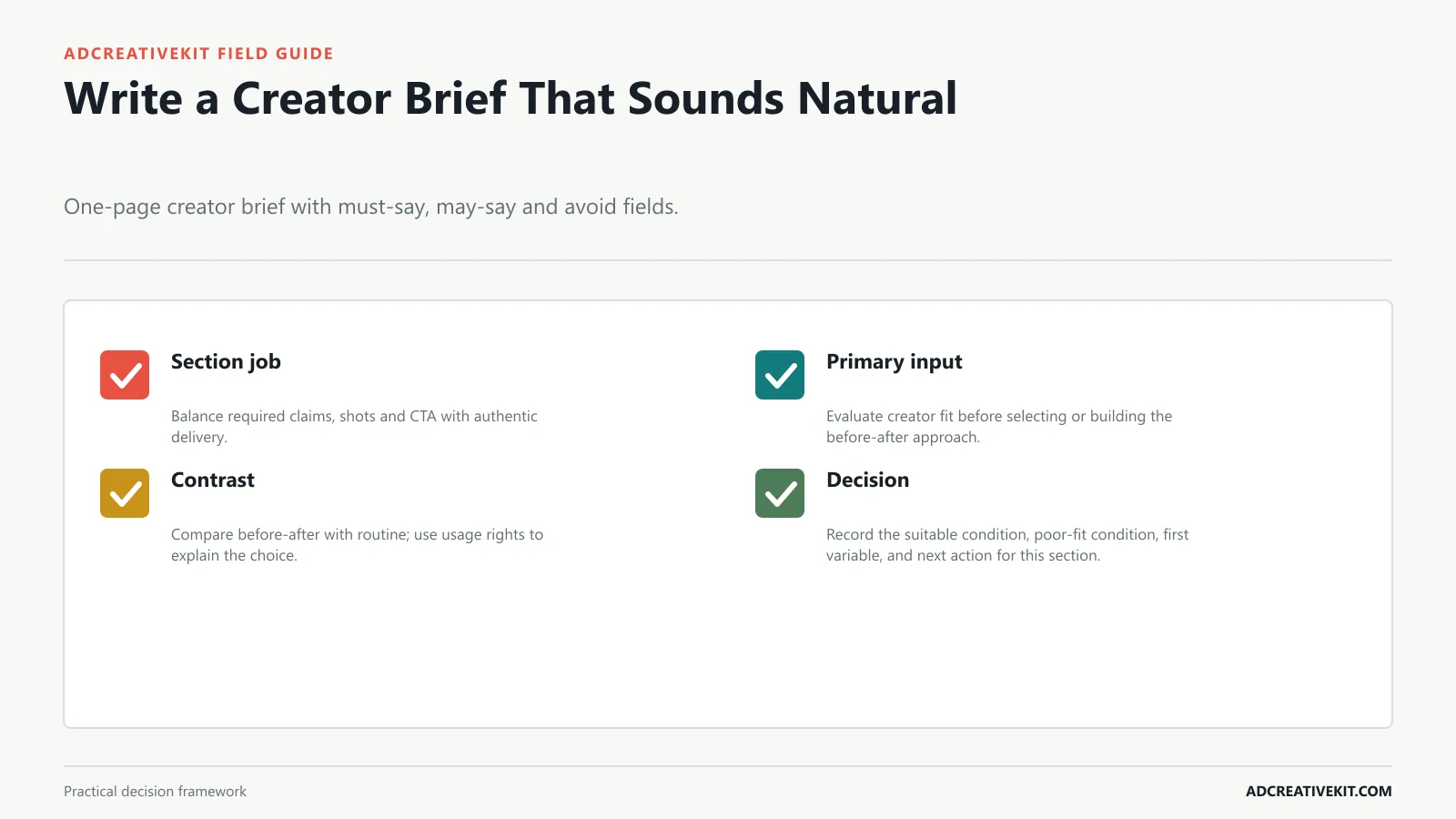
Brief the required message, evidence, shots, prohibited claims, disclosure, deliverables, revisions, usage period, channels, and compensation. Separate non-negotiable facts from wording the creator may make their own.
First-frame hook: name the problem, claim, curiosity, or moment immediately.
What to test: Handheld POV vs. face-to-camera intro vs. screen recording.
What to test: Creator reaction vs. ASMR-style product handling vs. fast walkthrough.
UGC ad templates are reusable scripts and layouts for creator-style ads. They define the hook, scene, product moment, proof, and CTA.
Start with creator fit, then verify usage rights before scripting a claim. The routine format can feel conversational without pretending a paid relationship is an unsolicited customer moment.
Require the original source and permission for testimonial language instead of handing a creator a fabricated personal result.
Invite checklist
- Give the creator two hook options for before-after.
- Translate creator fit into a shot the viewer can inspect.
- List evidence and prohibited overstatements.
- Confirm usage rights, usage rights, and disclosure before filming.
Connect this step to the Facebook ad creative review checklist so the decision survives the handoff from concept to campaign and post-click experience.
Secure Rights, Disclose Relationships and Test Hooks
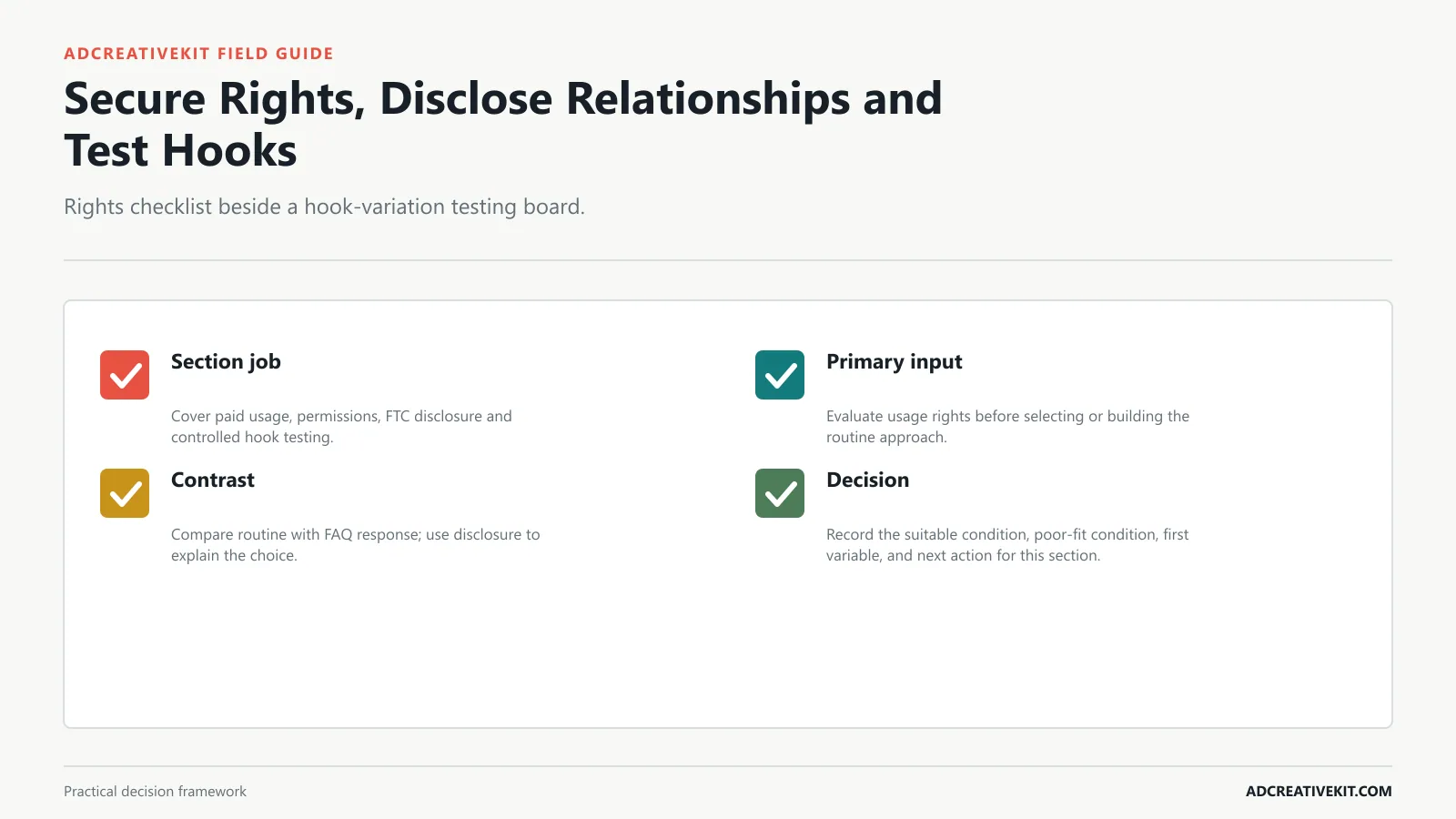
Secure creator and third-party rights before paid use, place disclosures where viewers can notice them, and test hooks while the body remains comparable. Keep records of approvals and substantiation with the final asset.
Reason to believe: review, demo, result, side-by-side, objection answer, or proof.
Best for: products with hesitation around price, ease, quality, fit, or credibility.
Example: "You do not need 50 new ad ideas. You need five angles tested in a clean structure."
UGC is content from customers or creators. UGC-style ads use the visual language of organic creator content, even when planned by the brand.
Start with usage rights, then verify disclosure before scripting a claim. The FAQ response format can feel conversational without pretending a paid relationship is an unsolicited customer moment.
Give editors explicit instructions for disclosure persistence, caption accuracy, and prohibited edits before variants are produced.
Frequently asked questions
Is paid creator content the same as organic UGC?
No. A commissioned creator ad is paid creator or UGC-style content. Describe the relationship accurately and follow applicable disclosure requirements rather than implying an unsolicited customer recommendation.
How detailed should a UGC creator brief be?
Specify the buyer belief, required evidence, must-capture shots, claim boundaries, disclosure, CTA, usage rights, and delivery formats. Leave room for the creator’s natural wording inside those guardrails.
Can a brand script a testimonial?
Do not script an experience the creator did not have or a claim the brand cannot substantiate. Use prompts and verified talking points, then preserve truthful delivery and required disclosures.
A creator package is complete only when the words are truthful, the shots are achievable, the claims are supportable, and the brand has permission to use the finished work as planned.
Use the Facebook ad creative review checklist before launch, record the hypothesis in the repeatable ad testing system, and inspect post-click continuity with the ecommerce CRO checklist.
Confirm current implementation details in FTC Disclosures 101 before production.