Lead Magnet Promotion Templates: A Quality-First Campaign
Lead magnet promotion is a journey, not a collection of social graphics. An ad can win inexpensive opt-ins while attracting people who never open the resource, engage with the follow-up, or fit the eventual offer. A stronger system begins with demand, selects angles by awareness, adapts assets by channel, protects message match from impression through delivery, and measures whether the subscriber reaches a meaningful next behavior.
Quick answer: Build promotion around one valuable promise and a natural next step. Adapt that promise to channel and awareness without changing the offer, keep the full opt-in journey consistent, and optimize for qualified activation rather than the cheapest possible email address.
Important implementation claims in this guide are grounded in primary guidance, including FTC CAN-SPAM compliance guide and Google email sender guidelines. The frameworks below translate those requirements into decisions a working creative or growth team can review.
Start With a Lead Magnet People Actually Want
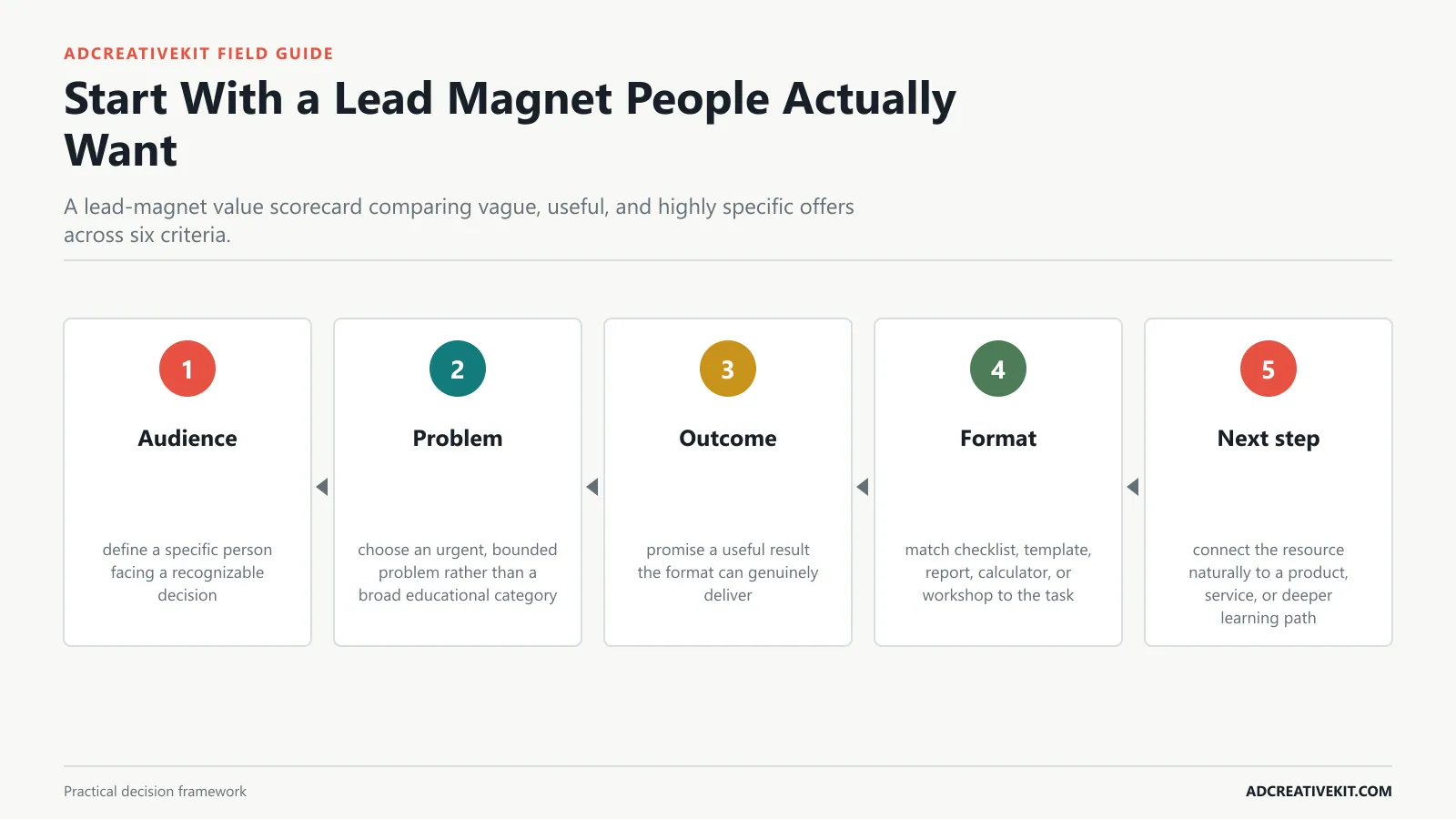
Validate the audience, urgent problem, promised outcome, format, time to value, and natural next step before promotion.
Demand test
Begin with audience: define a specific person facing a recognizable decision. Then inspect problem: choose an urgent, bounded problem rather than a broad educational category.
- Audience: define a specific person facing a recognizable decision.
- Problem: choose an urgent, bounded problem rather than a broad educational category.
- Outcome: promise a useful result the format can genuinely deliver.
- Format: match checklist, template, report, calculator, or workshop to the task.
- Next step: connect the resource naturally to a product, service, or deeper learning path.
Choose a Promotion Angle by Audience Awareness
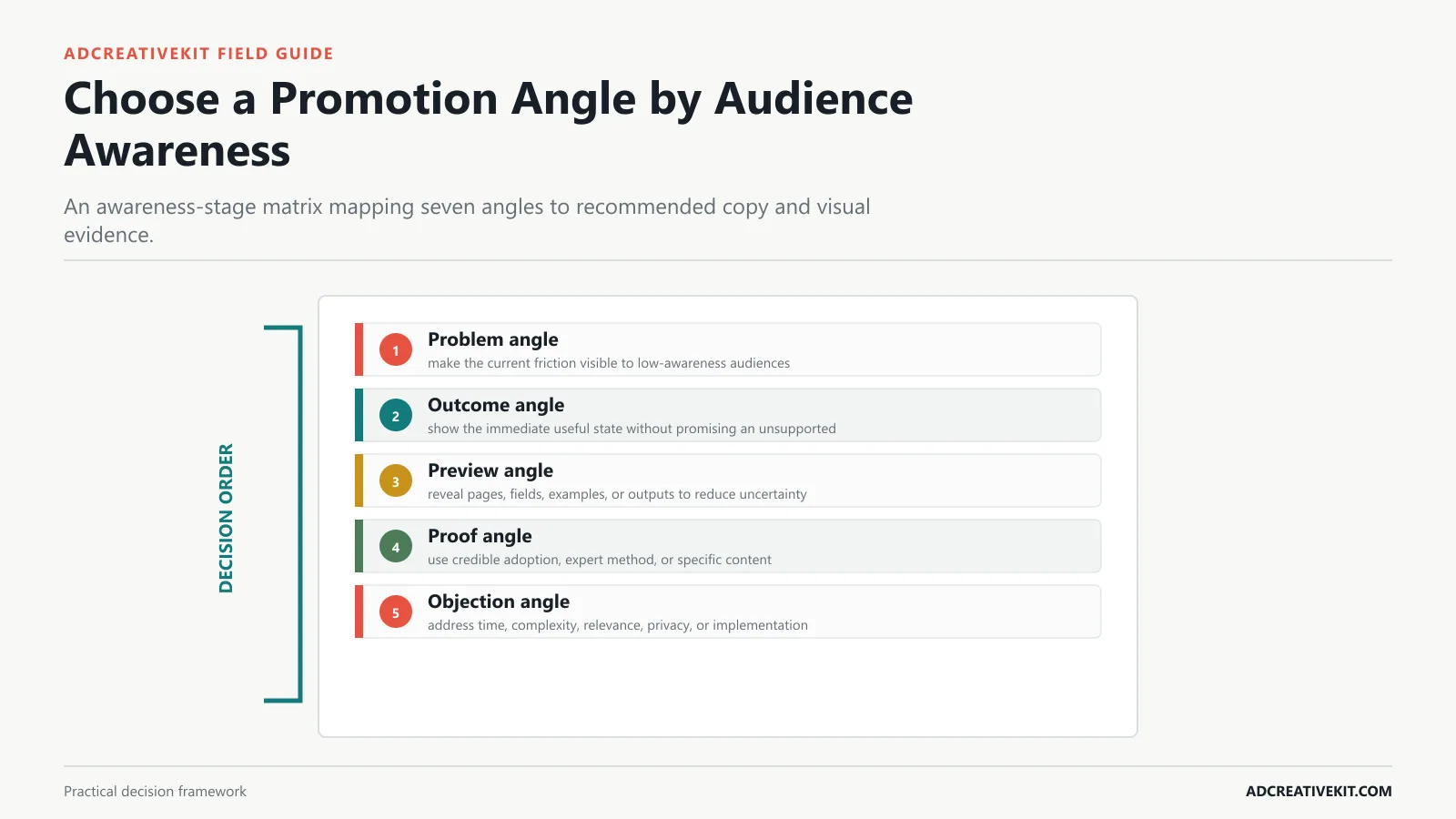
Match problem, outcome, preview, proof, curiosity, objection, and urgency angles to cold, warm, and returning audiences.
Awareness match
Begin with problem angle: make the current friction visible to low-awareness audiences. Then inspect outcome angle: show the immediate useful state without promising an unsupported transformation.
- Problem angle: make the current friction visible to low-awareness audiences.
- Outcome angle: show the immediate useful state without promising an unsupported transformation.
- Preview angle: reveal pages, fields, examples, or outputs to reduce uncertainty.
- Proof angle: use credible adoption, expert method, or specific content evidence.
- Objection angle: address time, complexity, relevance, privacy, or implementation doubts.
| Awareness match element | Practical requirement | Review question |
|---|---|---|
| Problem angle | make the current friction visible to low-awareness audiences | Record the observable evidence, any failure, and the owner of the next action. |
| Outcome angle | show the immediate useful state without promising an unsupported transformation | Record the observable evidence, any failure, and the owner of the next action. |
| Preview angle | reveal pages, fields, examples, or outputs to reduce uncertainty | Record the observable evidence, any failure, and the owner of the next action. |
| Proof angle | use credible adoption, expert method, or specific content evidence | Record the observable evidence, any failure, and the owner of the next action. |
| Objection angle | address time, complexity, relevance, privacy, or implementation doubts | Record the observable evidence, any failure, and the owner of the next action. |
Social Feed and Carousel Templates
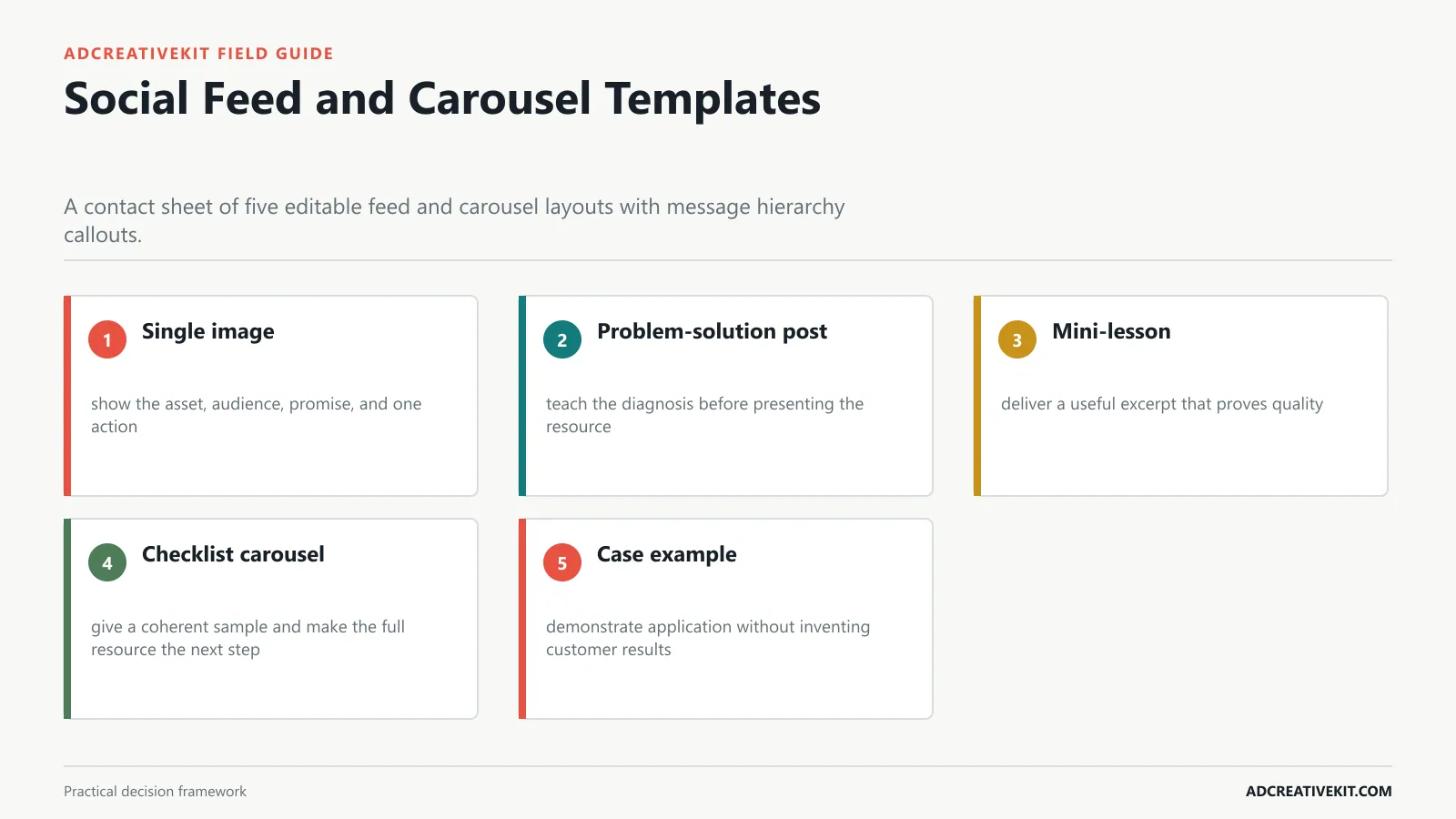
Provide templates for single-image previews, problem-solution posts, mini-lessons, checklists, and swipeable excerpts.
Feed adaptation
Begin with single image: show the asset, audience, promise, and one action. Then inspect problem-solution post: teach the diagnosis before presenting the resource.
- Single image: show the asset, audience, promise, and one action.
- Problem-solution post: teach the diagnosis before presenting the resource.
- Mini-lesson: deliver a useful excerpt that proves quality.
- Checklist carousel: give a coherent sample and make the full resource the next step.
- Case example: demonstrate application without inventing customer results.
For the adjacent workflow, use the marketing hooks guide. When this section reveals a broader conversion or production issue, continue with the ecommerce CRO checklist.
Story, Reel Cover, and Short-Form Templates
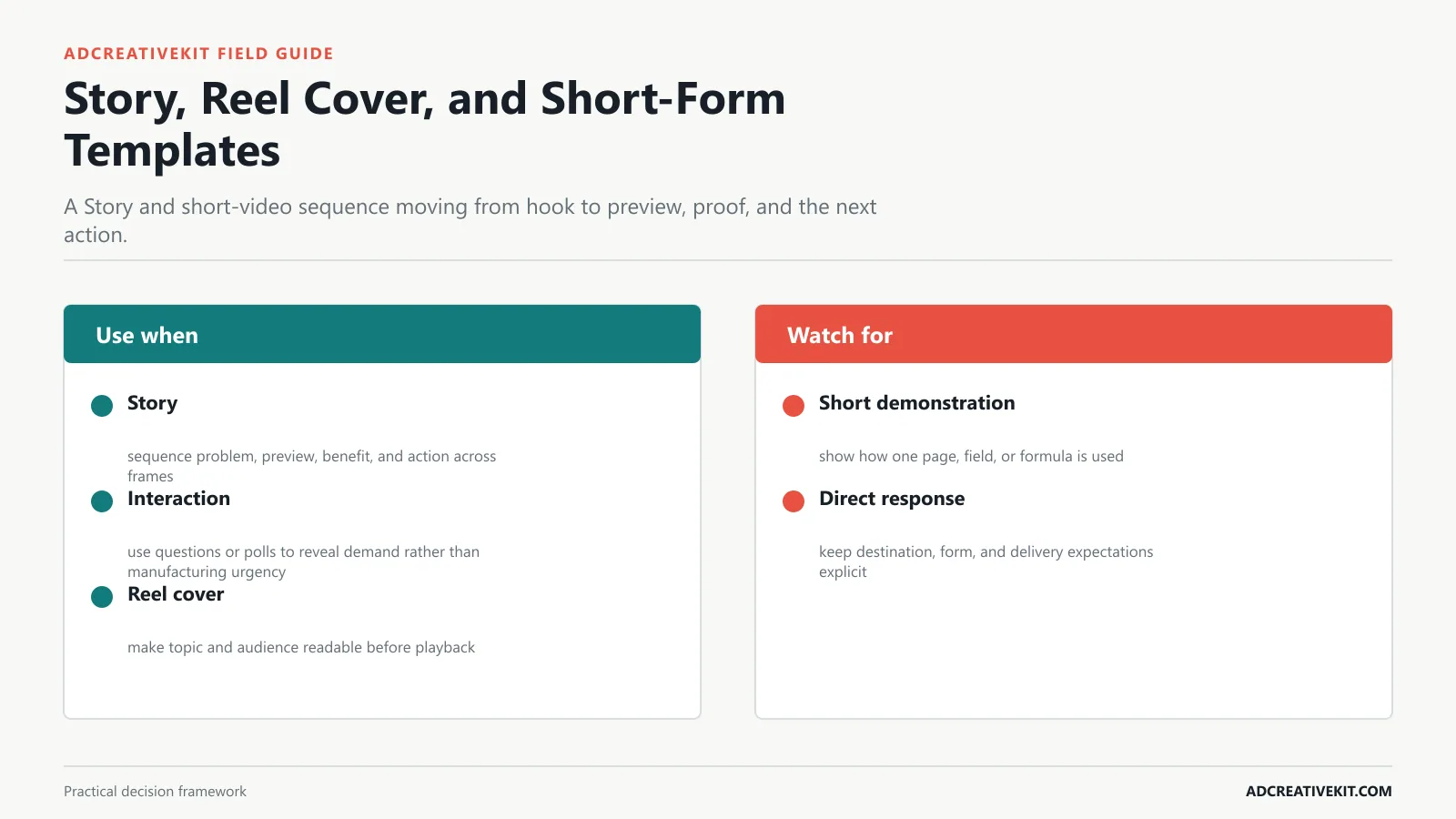
Adapt promotion for vertical attention, interaction stickers, short demonstrations, and direct-response sequencing.
Vertical adaptation
Begin with story: sequence problem, preview, benefit, and action across frames. Then inspect interaction: use questions or polls to reveal demand rather than manufacturing urgency.
- Story: sequence problem, preview, benefit, and action across frames.
- Interaction: use questions or polls to reveal demand rather than manufacturing urgency.
- Reel cover: make topic and audience readable before playback.
- Short demonstration: show how one page, field, or formula is used.
- Direct response: keep destination, form, and delivery expectations explicit.
Paid Lead Magnet Ad Templates
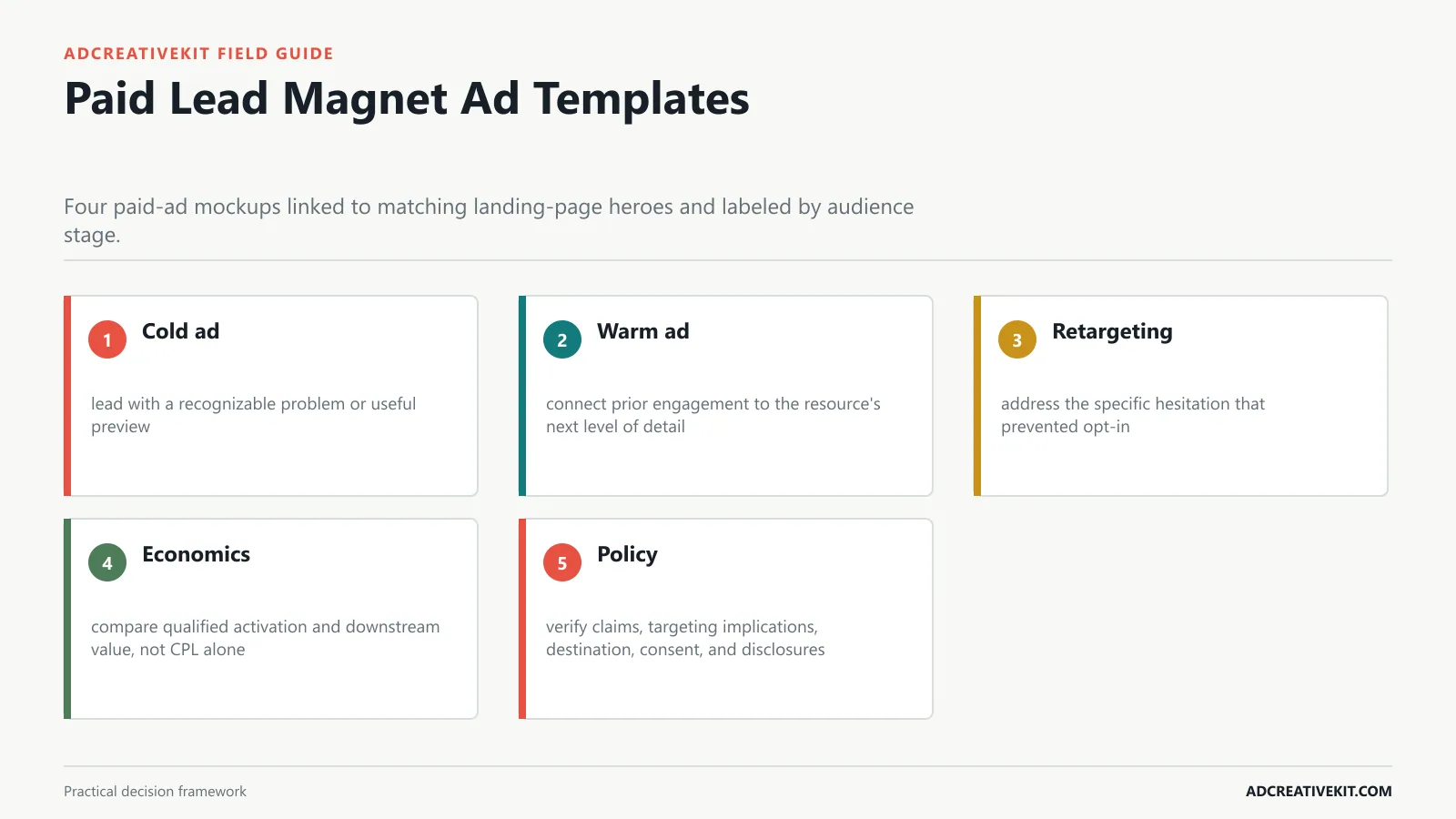
Show ad structures for problem, outcome, resource preview, proof, and retargeting while considering acquisition economics.
Paid acquisition test
Begin with cold ad: lead with a recognizable problem or useful preview. Then inspect warm ad: connect prior engagement to the resource’s next level of detail.
- Cold ad: lead with a recognizable problem or useful preview.
- Warm ad: connect prior engagement to the resource’s next level of detail.
- Retargeting: address the specific hesitation that prevented opt-in.
- Economics: compare qualified activation and downstream value, not CPL alone.
- Policy: verify claims, targeting implications, destination, consent, and disclosures.
Website, Blog, and In-Product Promotion Templates
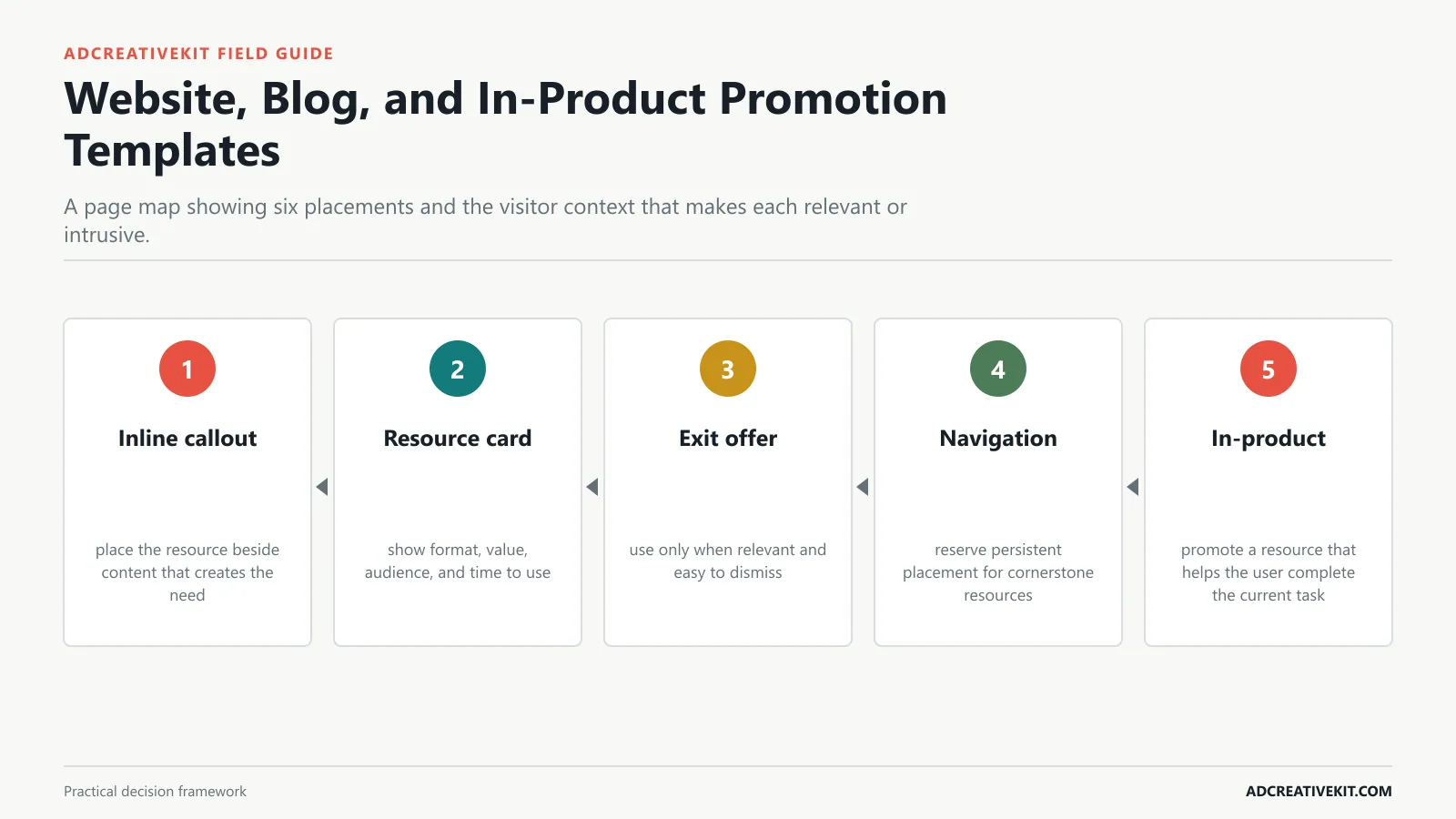
Cover inline banners, contextual callouts, exit offers, resource cards, navigation placements, and product-adjacent prompts.
Owned-placement test
Begin with inline callout: place the resource beside content that creates the need. Then inspect resource card: show format, value, audience, and time to use.
- Inline callout: place the resource beside content that creates the need.
- Resource card: show format, value, audience, and time to use.
- Exit offer: use only when relevant and easy to dismiss.
- Navigation: reserve persistent placement for cornerstone resources.
- In-product: promote a resource that helps the user complete the current task.
For the adjacent workflow, use the email marketing graphic templates. When this section reveals a broader conversion or production issue, continue with the marketing hooks guide.
Keep the Entire Opt-In Journey Message-Matched
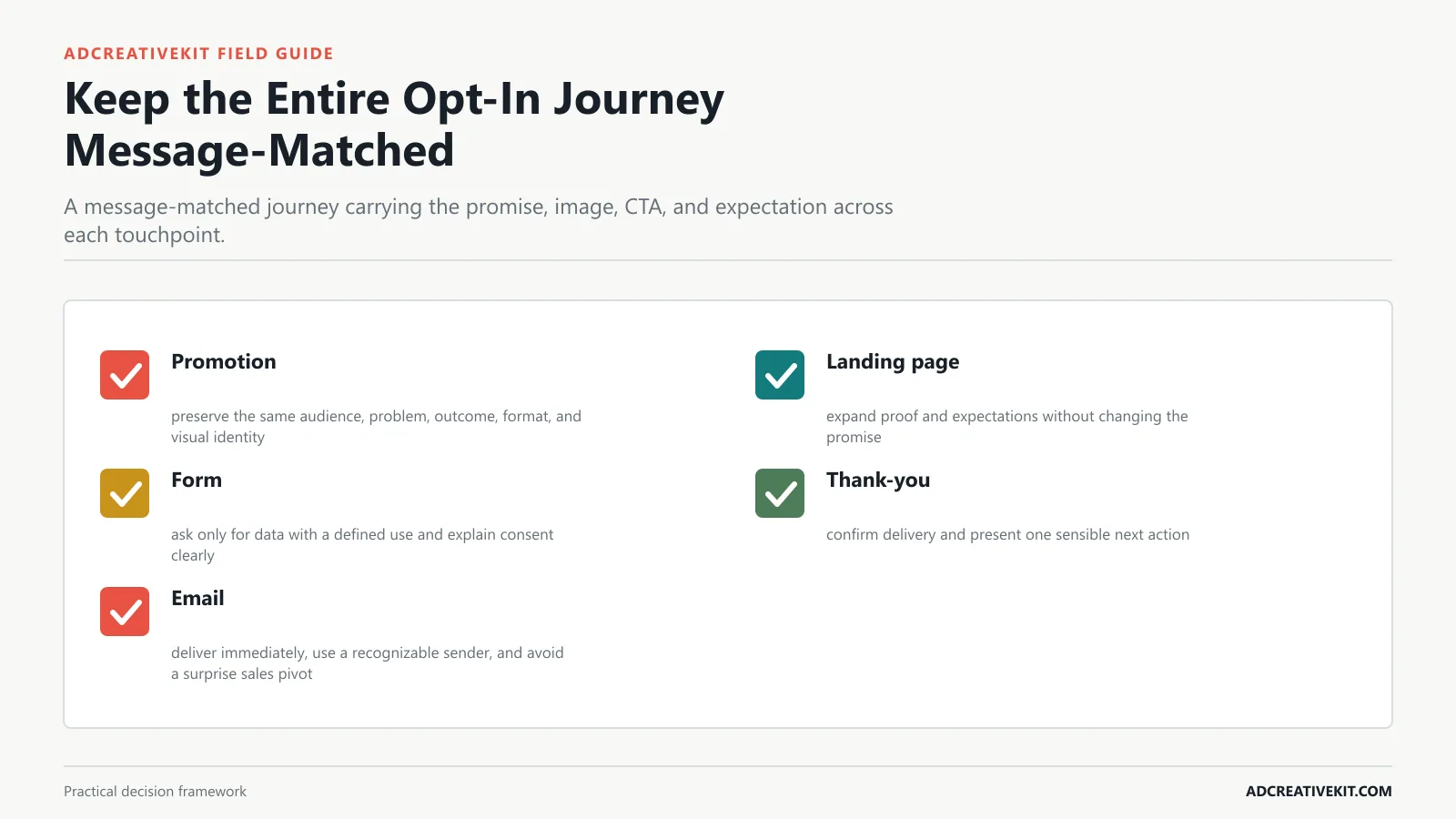
Align promotion, landing page, form, thank-you page, delivery email, and first nurture message.
Journey continuity
Begin with promotion: preserve the same audience, problem, outcome, format, and visual identity. Then inspect landing page: expand proof and expectations without changing the promise.
- Promotion: preserve the same audience, problem, outcome, format, and visual identity.
- Landing page: expand proof and expectations without changing the promise.
- Form: ask only for data with a defined use and explain consent clearly.
- Thank-you: confirm delivery and present one sensible next action.
- Email: deliver immediately, use a recognizable sender, and avoid a surprise sales pivot.
Run a 14-Day Lead Magnet Promotion Plan
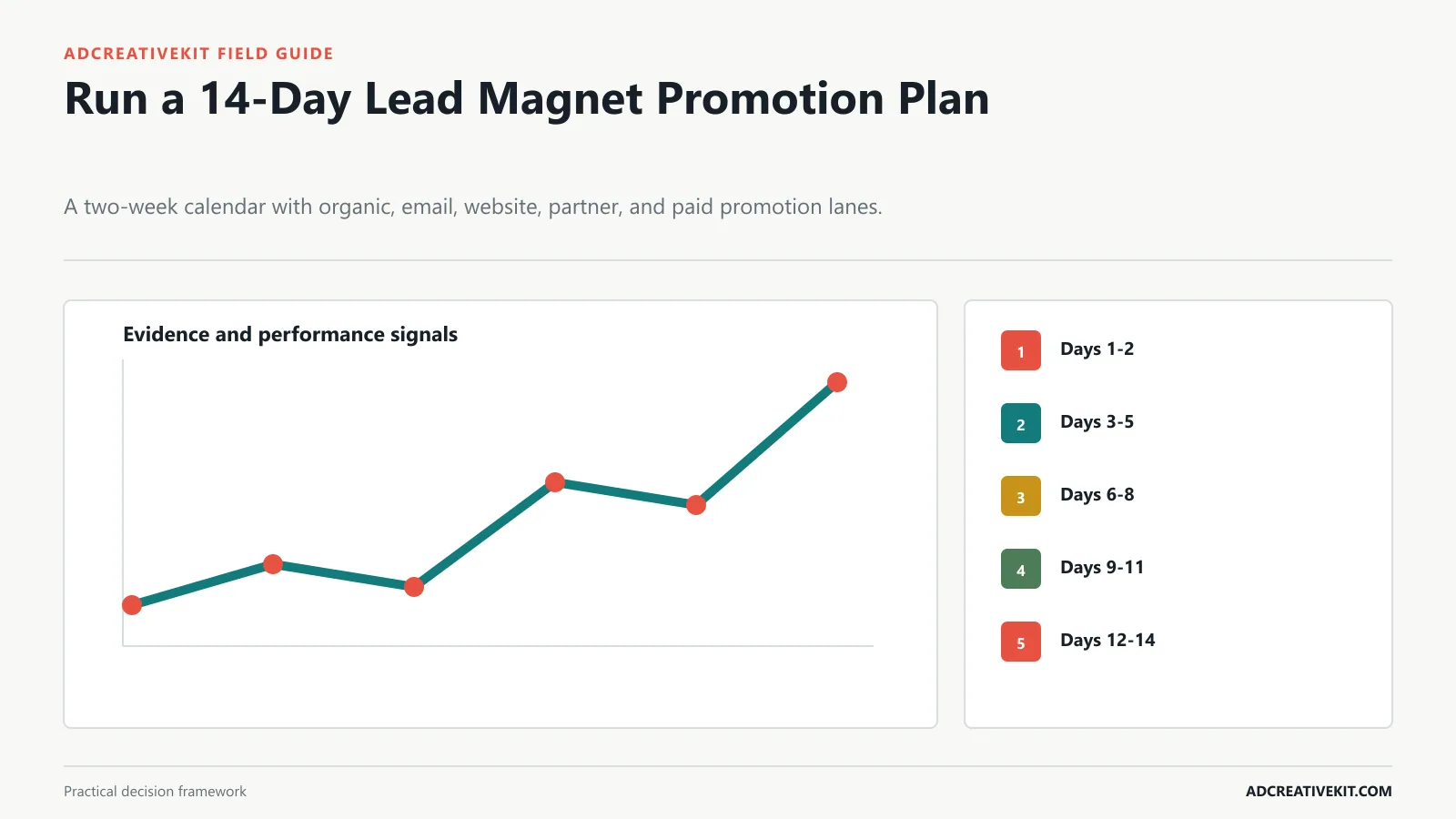
Provide a channel mix, repurposing cadence, owner, asset status, and follow-up schedule.
Campaign cadence
Begin with days 1-2: validate promise, page, delivery, tracking, and source assets. Then inspect days 3-5: publish educational previews and collect audience language.
- Days 1-2: validate promise, page, delivery, tracking, and source assets.
- Days 3-5: publish educational previews and collect audience language.
- Days 6-8: launch paid or partner distribution with controlled angles.
- Days 9-11: repurpose the strongest message across vertical and email placements.
- Days 12-14: review quality, follow-up behavior, and the next experiment.
For implementation details, consult Meta Advertising Standards. Requirements and platform behavior change, so review the current primary documentation before launch rather than relying on a static checklist alone.
Measure Qualified Leads, Not Cheap Opt-Ins
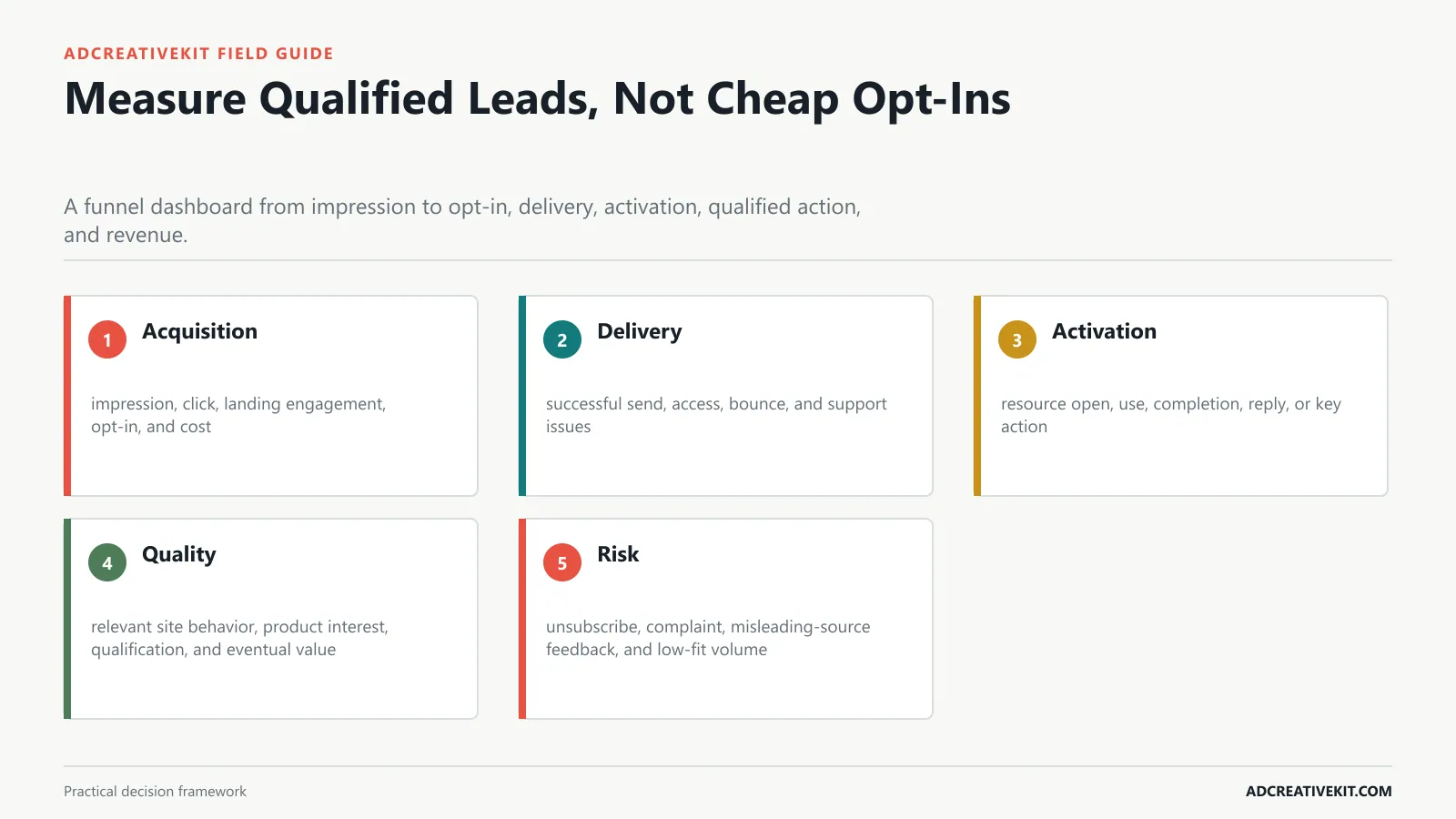
Track opt-in rate, cost per lead, delivery, activation, engagement, sales-qualified behavior, and unsubscribe or complaint risk.
Lead-quality test
Begin with acquisition: impression, click, landing engagement, opt-in, and cost. Then inspect delivery: successful send, access, bounce, and support issues.
- Acquisition: impression, click, landing engagement, opt-in, and cost.
- Delivery: successful send, access, bounce, and support issues.
- Activation: resource open, use, completion, reply, or key action.
- Quality: relevant site behavior, product interest, qualification, and eventual value.
- Risk: unsubscribe, complaint, misleading-source feedback, and low-fit volume.
| Lead-quality test element | Practical requirement | Review question |
|---|---|---|
| Acquisition | impression, click, landing engagement, opt-in, and cost | Record the observable evidence, any failure, and the owner of the next action. |
| Delivery | successful send, access, bounce, and support issues | Record the observable evidence, any failure, and the owner of the next action. |
| Activation | resource open, use, completion, reply, or key action | Record the observable evidence, any failure, and the owner of the next action. |
| Quality | relevant site behavior, product interest, qualification, and eventual value | Record the observable evidence, any failure, and the owner of the next action. |
| Risk | unsubscribe, complaint, misleading-source feedback, and low-fit volume | Record the observable evidence, any failure, and the owner of the next action. |
For the adjacent workflow, use the landing page graphic templates. When this section reveals a broader conversion or production issue, continue with the email marketing graphic templates.
Lead Magnet Campaign QA Checklist
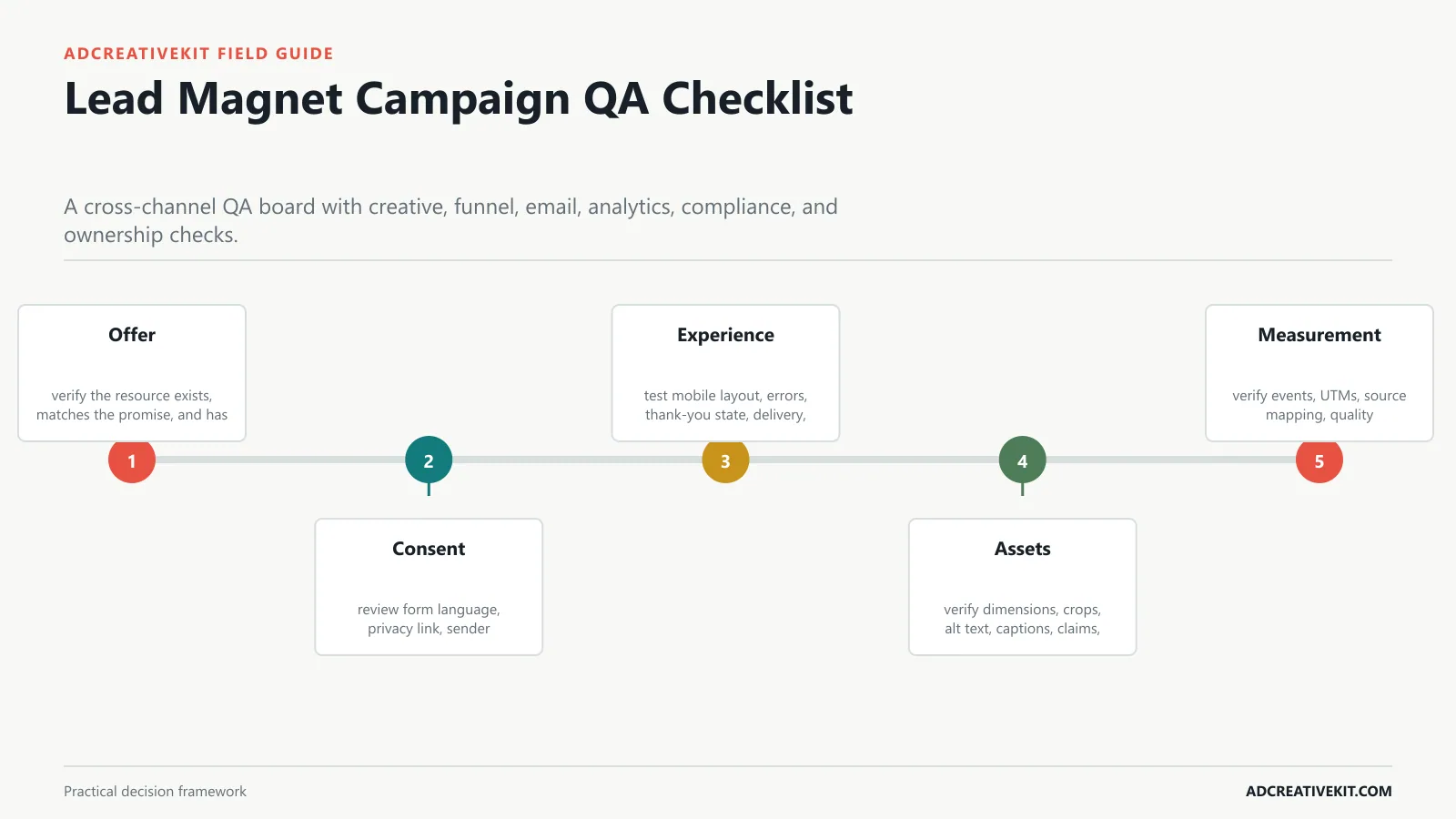
Verify claims, consent, privacy, tracking, dimensions, mobile behavior, accessibility, delivery, and follow-up before launch.
Launch gate
Begin with offer: verify the resource exists, matches the promise, and has current details. Then inspect consent: review form language, privacy link, sender identity, and follow-up expectation.
- Offer: verify the resource exists, matches the promise, and has current details.
- Consent: review form language, privacy link, sender identity, and follow-up expectation.
- Experience: test mobile layout, errors, thank-you state, delivery, and accessibility.
- Assets: verify dimensions, crops, alt text, captions, claims, and version labels.
- Measurement: verify events, UTMs, source mapping, quality definitions, and owner.
Connect Promotion to the Follow-Up Experience
The campaign does not end when the form submits. The first email should deliver the promised resource without hiding it behind a sales pitch. The next message can help the subscriber complete one useful step, followed by an example or teardown that makes the resource easier to apply. Only then should the sequence introduce a paid next step that logically follows the original problem.
Track more than delivery and opens. Look for resource clicks, replies, activation events, qualified site visits, product interest, unsubscribes, and complaints by acquisition source. If a promotion angle creates inexpensive opt-ins but little resource use or high complaint volume, it has attracted attention without creating the intended audience relationship. Feed that learning back into the promise, targeting, form, and channel mix.
Frequently asked questions
Measurement setup: Tag each promotion route consistently so source comparisons are meaningful. Google Analytics documents how to build campaign URLs with UTM parameters; use a controlled naming convention for source, medium, campaign, and content, then evaluate opt-in quality and downstream behavior rather than treating all leads as equivalent. See the Google Analytics campaign URL guidance.
How many channels should promote a lead magnet?
Use the channels where the intended audience already encounters the problem. A smaller coordinated mix is better than adapting poorly to every platform.
What is a good lead magnet conversion rate?
There is no universal target. Compare by source, audience, offer, device, and lead quality, then improve the weakest stage in the journey.
Should the lead magnet immediately sell a product?
It should create the promised value first. The next offer can follow when it is a natural continuation rather than a surprise substitution.
Turn this guide into an operating asset
Save the framework with the evidence, owner, date, and decision attached. That turns a one-time article into a repeatable review system and prevents future teams from treating an old output as a universal rule.