Holiday Sale Ad Templates: Design for Every Shopping Phase
Holiday sale ad templates should do more than add seasonal colors to a standard discount. Shopper needs change across the season. Early buyers seek ideas. Mid-season buyers compare recipients, budgets, and bundles. Late buyers need delivery confidence. Last-minute shoppers need rescue options. After the holiday, self-purchase, exchange, and New Year motivations can replace gifting.
Quick answer: Organize holiday creative around the shopper’s current uncertainty. Pair each phase with an appropriate gift angle, layout, fulfillment message, channel set, and test question. Keep deadlines exact, maintain recognizable brand rules, and prepare expired and fallback states before the campaign begins.
Map the Holiday Campaign by Shopper Need
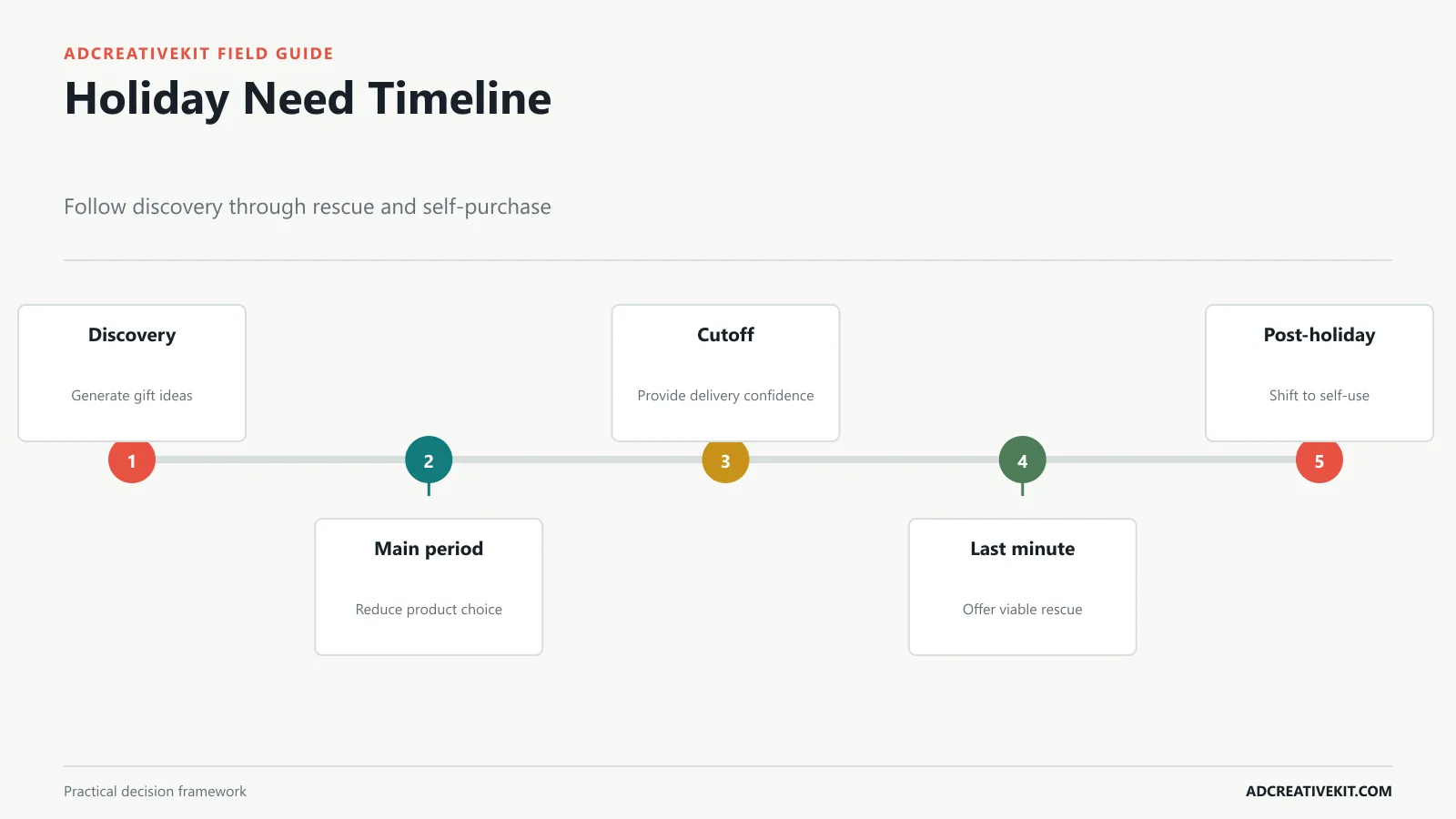
During discovery, help shoppers generate ideas and recognize who the products suit. During the main shopping period, reduce choice through best sellers, recipient categories, budgets, routines, and bundles. Approaching the shipping cutoff, delivery becomes part of product value. After the cutoff, emphasize pickup, digital delivery, gift cards, or products whose delivery promise remains realistic. Post-holiday creative can shift toward self-purchase, exchanges, organizing, or New Year use cases.
| Phase | Main question | Creative job | Useful CTA |
|---|---|---|---|
| Discovery | What could I give? | Organize ideas by person or need | Explore gift ideas |
| Main shopping | Which option is right? | Reduce choice with proof and categories | Shop best sellers |
| Cutoff | Will it arrive? | State exact delivery conditions | Shop delivery-ready gifts |
| Last minute | What can I still get? | Present pickup or digital rescue | Get it in time |
| Post-holiday | What do I need now? | Shift from gifting to self-use | Start the new routine |
Build this map before writing individual ads. It protects the team from repeating the same discount with increasingly aggressive countdowns. NRF’s winter holiday research can inform broad context, but customer search, support, merchandising, inventory, and fulfillment data should determine your phase transitions.
Choose a Holiday Offer and Gift Angle
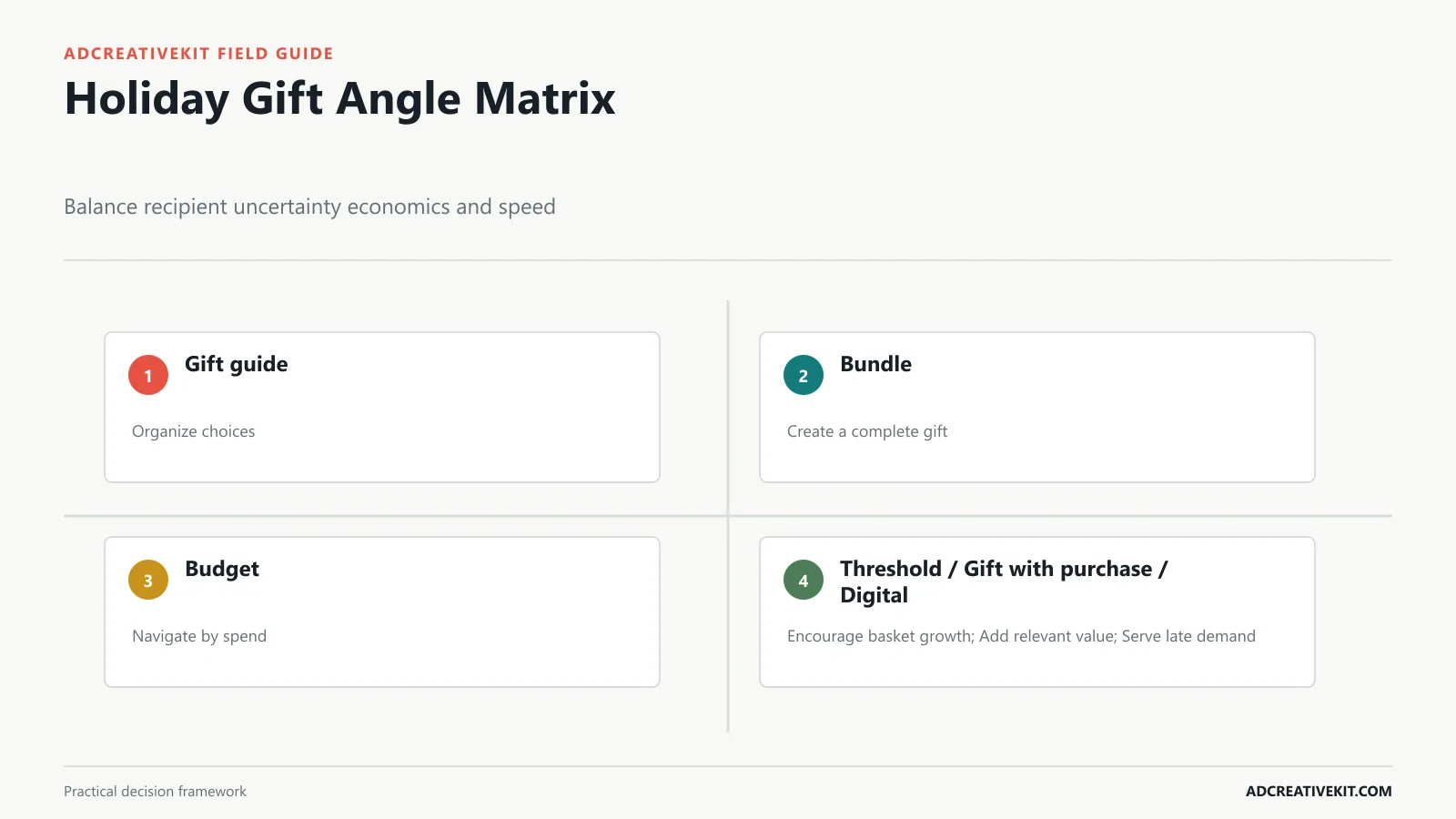
Gift guides reduce search effort when organized around a real decision: recipient, interest, budget, use case, or delivery speed. Bundles can feel complete and increase basket value, but shoppers need to see contents and savings. Budget collections help customers choose quickly without implying that price alone defines quality. Threshold offers can support order value. Gifts with purchase can add delight if the gift is relevant and available. Digital products and gift cards become more valuable as physical deadlines pass.
Match the angle to product truth. “For the home cook” is useful only if the collection actually supports that person. “Under $50” needs current prices. “Ready to ship” needs inventory and fulfillment evidence. “Arrives by December 24” needs region, order cutoff, shipping method, and operational confidence.
Keep a margin and stock view beside the creative plan. A beautiful gift guide can concentrate demand on products with limited inventory. For offer mechanics beyond gifting, consult the promotional template framework.
Use Layouts That Simplify Gift Decisions
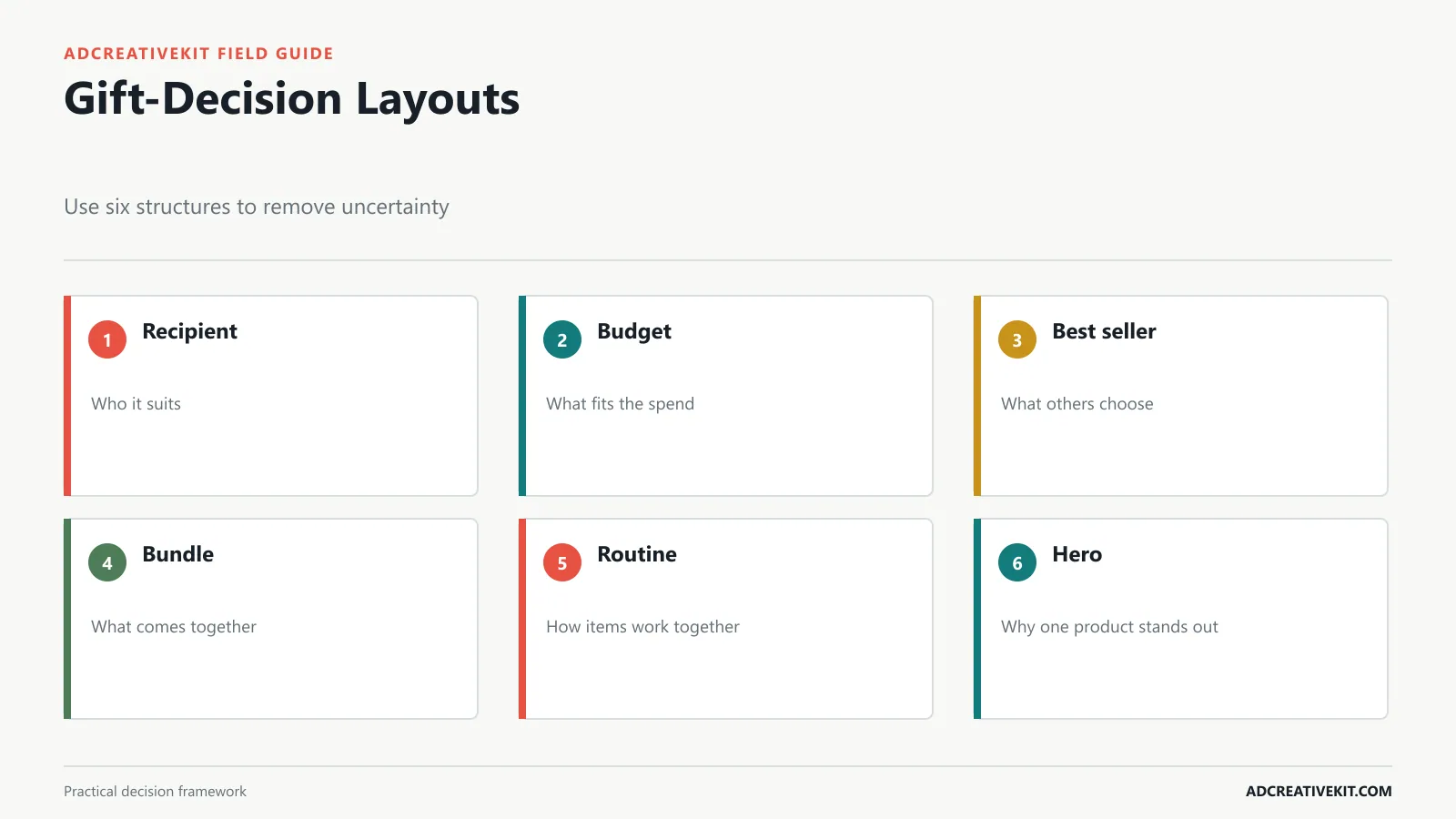
A recipient layout groups products around a person and needs enough specificity to feel useful. A price-band layout makes budget the navigation. A best-seller layout adds social confidence but should use a truthful basis. A bundle layout shows a complete gift and its contents. A routine layout demonstrates how products work together. A single-hero layout gives one high-priority product room to feel inspectable and premium.
Use carousels when the shopper benefits from sequential choice: slide one frames the recipient or need, middle slides show options, and the final slide gives the next step. Avoid a crowded collage that makes every product tiny. The ecommerce carousel guide provides more detailed slide structures.
Pair the layout with the appropriate destination. Recipient ads should land on the matching guide. Budget ads should preserve the price filter. Bundle ads should land on the exact bundle. A holiday homepage that asks the shopper to reconstruct the category wastes the clarity earned by the ad.
Make Shipping and Returns Part of the Creative
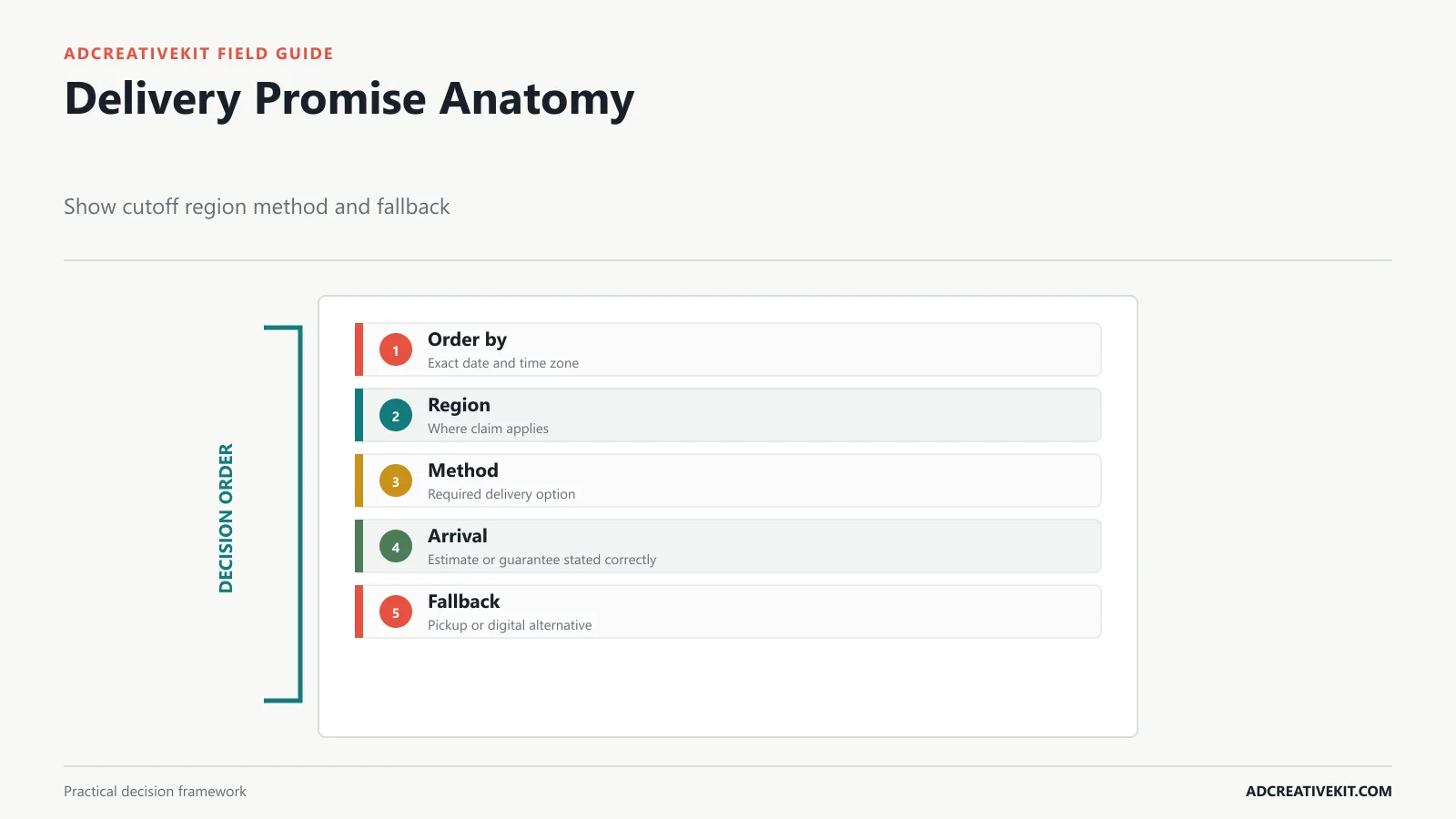
As the holiday approaches, fulfillment confidence can outweigh a modest price difference. State exact order deadlines, the applicable region, required shipping method, and relevant exclusions. Distinguish “ships by” from “arrives by.” If delivery dates are estimates, do not present them as guarantees.
Include returns, exchanges, gift receipts, discreet packaging, and digital access when they reduce gift-buying risk. Keep the main creative concise, then place complete details on the destination. A useful cutoff module contains: “Order by [date and time zone] with [method] for estimated delivery by [date] in [region], subject to availability,” adapted to what the business can actually support.
Prepare a fallback state before the cutoff: local pickup, digital gift card, printable note, subscription activation, or a curated collection with later delivery made explicit. Update or remove ads immediately when inventory or carrier reality changes. The FTC’s truth-in-advertising resources apply to price and delivery claims just as they do to product benefits.
Create Seasonal Style Without Losing the Brand
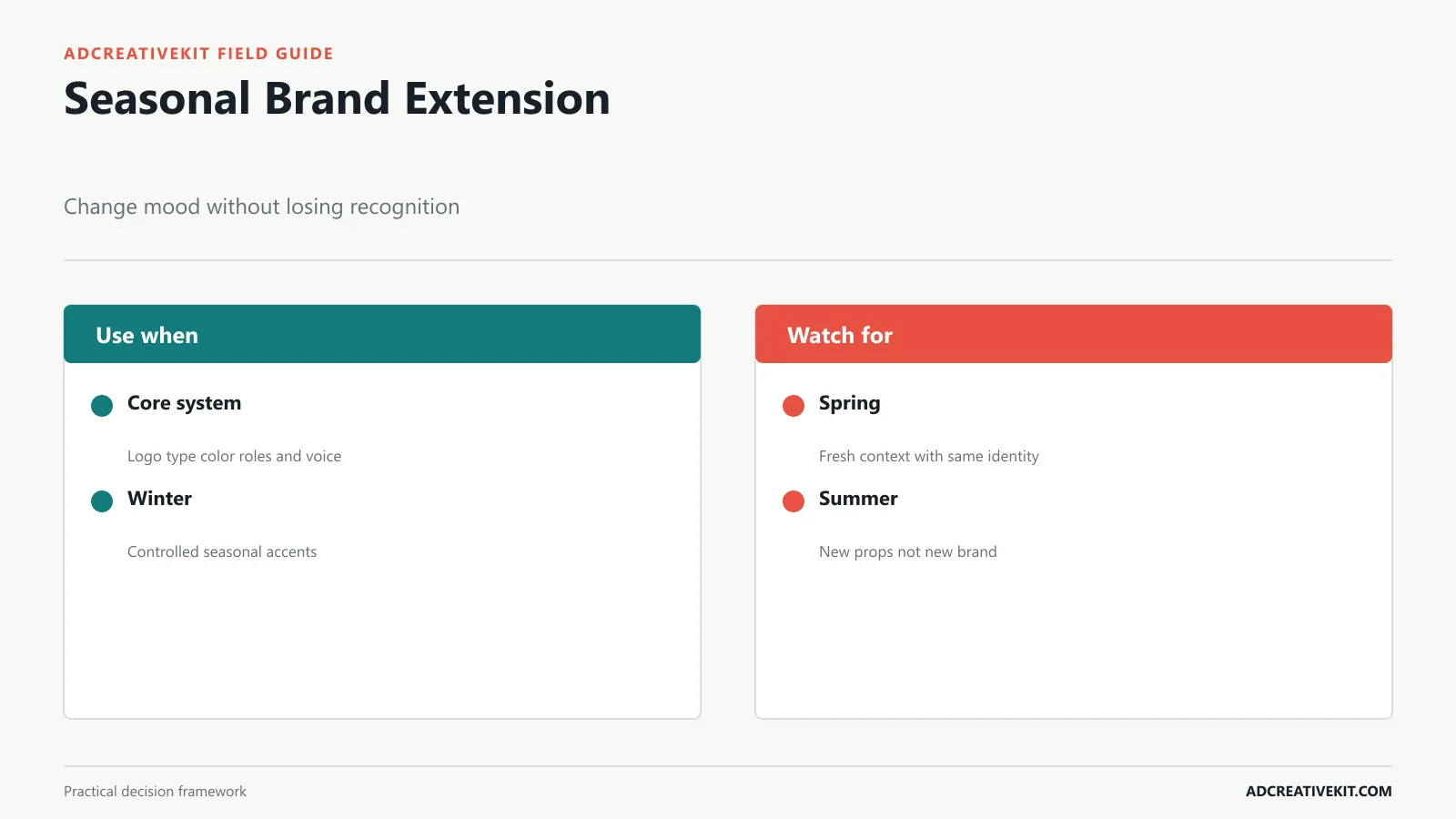
Keep the core logo, type hierarchy, color roles, image treatment, and voice stable. Add seasonal color as an accent, not necessarily a replacement palette. Choose props that explain context rather than cover the product. Preserve realistic scale and appearance. If every competitor uses identical seasonal symbols, distinctive product styling and brand composition become more valuable.
Create a small seasonal extension sheet: approved accent colors, backgrounds, prop direction, photography notes, graphic motifs, headline tone, and prohibited treatments. This lets multiple creators produce coherent assets without cloning one layout.
Check contrast and readability across festive backgrounds. Do not use color alone to communicate eligibility, stock, or selected states. W3C’s accessible design guidance offers practical checks for contrast, labels, spacing, and adaptable content. Review every asset at actual mobile size, where decorative detail can become noise.
Build the Cross-Channel Holiday Asset Set
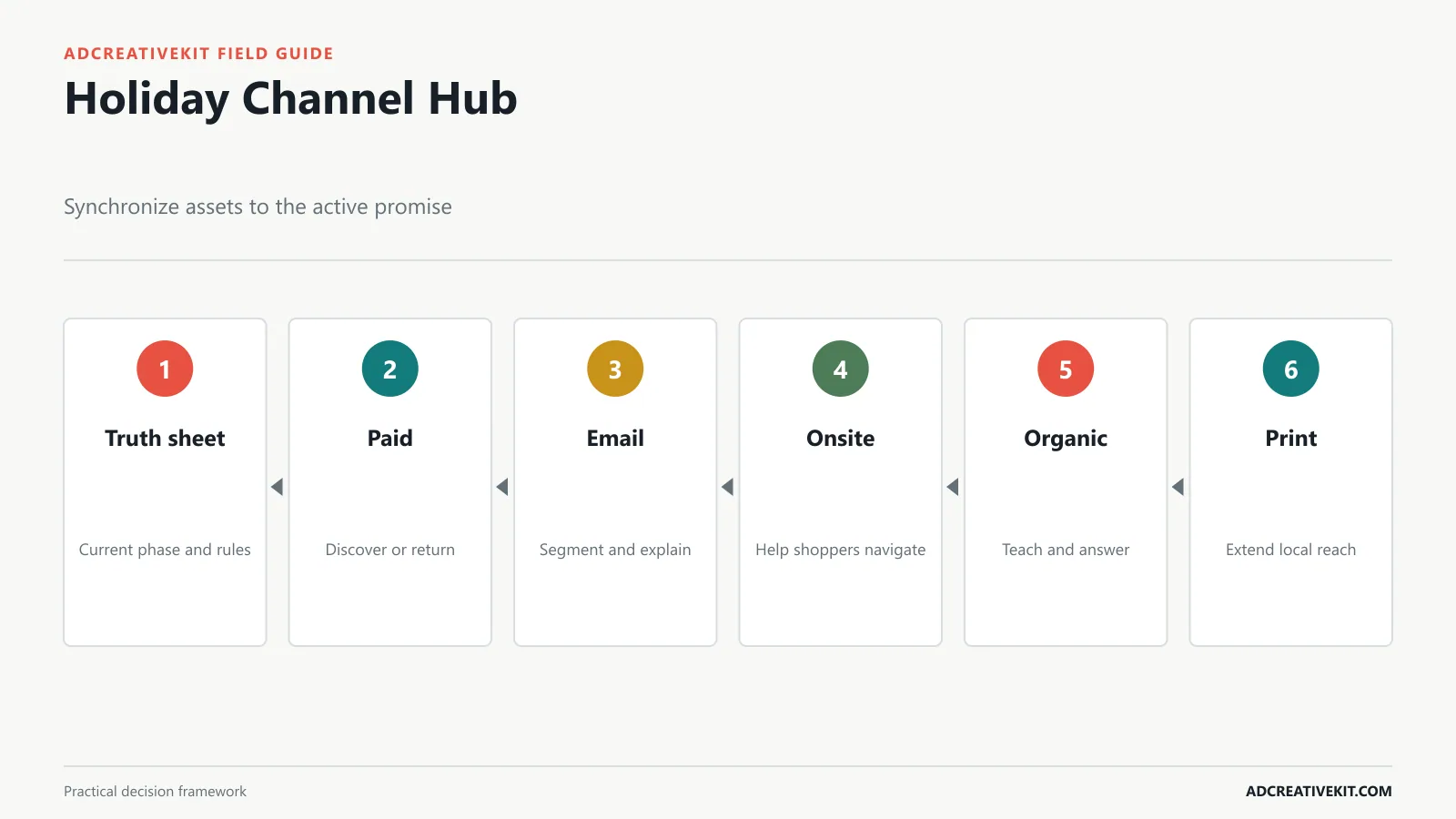
Create one campaign truth sheet containing phase, audience, offer, products, code, delivery deadline, region, exclusions, destination, inventory owner, and expiry time. Paid social, email, website, organic, display, and print executions should inherit from it.
Paid creative earns discovery or return visits. Email can segment by customer history and explain gift logic. Onsite banners help active shoppers navigate current collections. Organic content can teach and answer questions. Display needs a compact promise. Print needs distance, durability, and a clear destination. The same campaign idea should remain recognizable, but composition and message depth should fit the channel.
Schedule activation and deactivation together. Include teaser, live, cutoff, fallback, ended, and post-holiday states. Assign someone to audit every public touchpoint when a deadline passes. For email-specific structures, use the email marketing templates guide.
Test by Holiday Phase
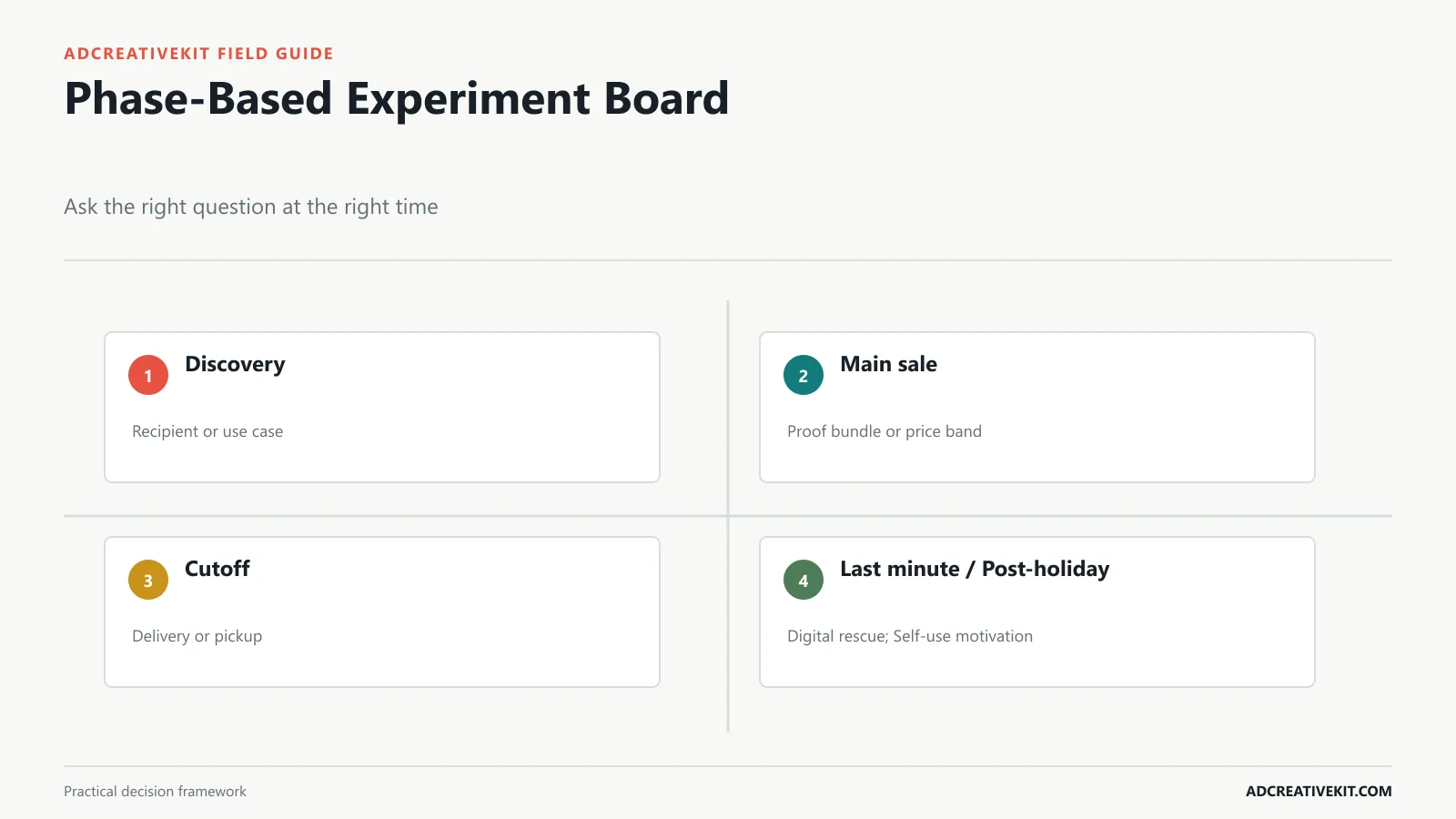
During discovery, compare recipient framing, use case, or gift-guide organization. During the main period, compare proof, best sellers, bundles, and price bands. Near cutoff, test whether delivery certainty, pickup, or digital access resolves more hesitation. Post-holiday, compare self-gift, reset, routine, or exchange-support angles.
Keep the offer and audience stable when testing creative communication. Define a hypothesis, control, one meaningful variable, primary metric, guardrails, and decision window. Do not carry a “winner” from discovery into final call without considering that the shopper’s need has changed.
Interpret clicks alongside qualified product views, conversion, average order value, margin, stock mix, returns, and delivery-related support. Record weather, carrier events, stockouts, and offer changes because they can affect the outcome independently of creative.
Run the Holiday Campaign QA Checklist
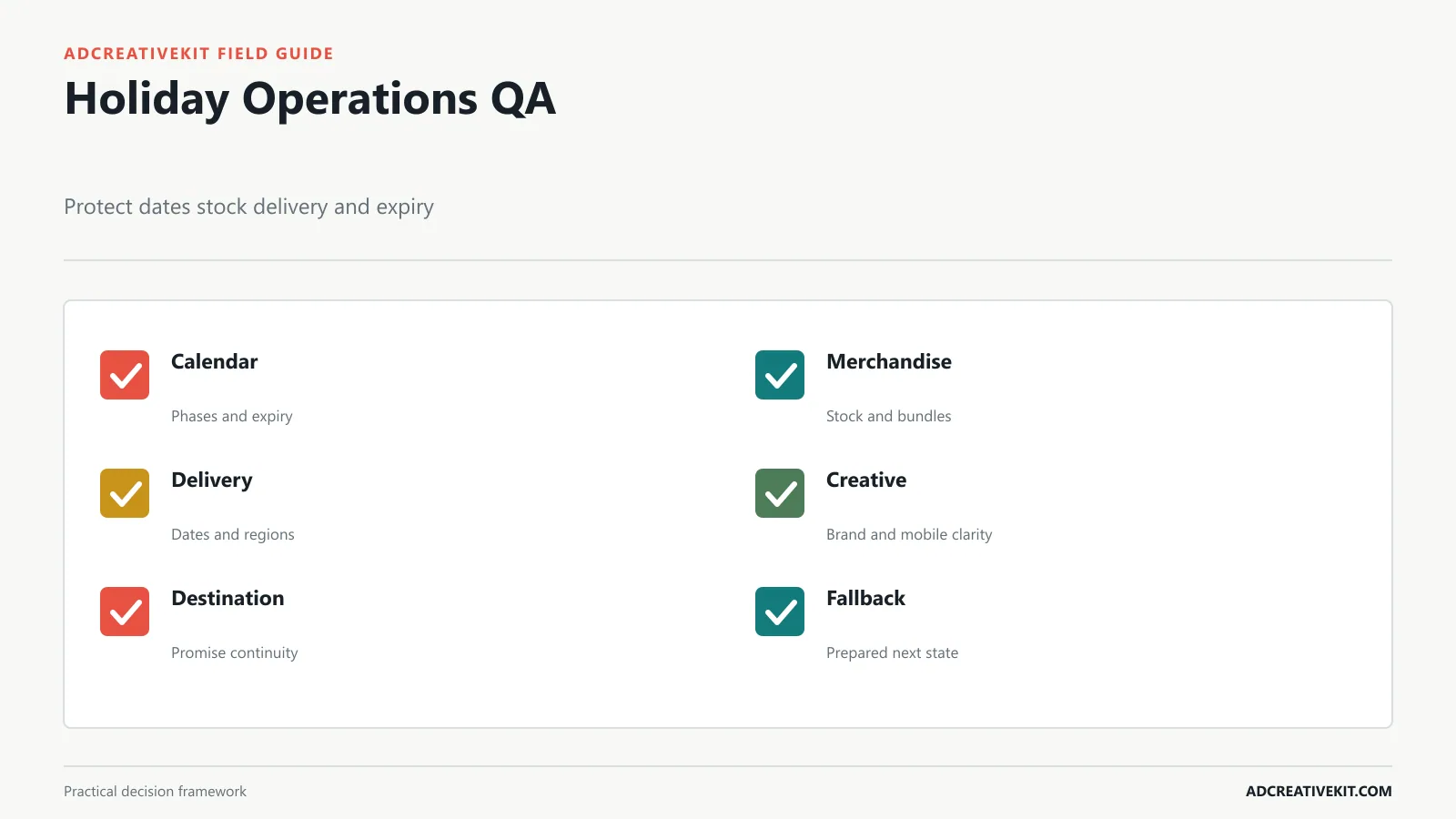
- Calendar: phase start, deadline, time zone, expiry, and post-holiday transition are assigned.
- Merchandise: products, bundles, price bands, gift inventory, and substitutes are accurate.
- Delivery: regions, methods, dates, pickup, and fallback claims are verified.
- Creative: product visibility, brand recognition, contrast, mobile crop, and conditions pass.
- Destination: collection, price, code, stock, returns, and delivery continue the ad promise.
- Channels: every scheduled asset uses the current phase and approved wording.
- Measurement: tracking, primary outcomes, economic guardrails, and annotations work.
- Expiry: someone owns removal of outdated creative and activation of fallback assets.
Worked example: move from gift guide to last-minute rescue
A tea brand begins with recipient guides for hosts, new enthusiasts, and experienced brewers. During the main shopping period, it promotes best-selling sets by budget. As the standard-shipping cutoff approaches, creative states the exact order time, eligible regions, and shipping method. The landing page repeats those conditions near the products.
After the cutoff, the campaign does not keep the old arrival promise. It changes to local pickup where available, an emailed gift card, and a printable gift note for products arriving later. Post-holiday creative shifts toward a personal winter routine rather than pretending gifting demand remains unchanged. The product styling stays recognizable across every phase.
Operate deadline changes safely
Holiday plans should assume inventory, carrier capacity, weather, or local operations may change. Define who receives those signals, who decides whether a promise changes, and which assets are affected. Maintain a channel register so ads, email, website, marketplace listings, organic posts, and partner placements can be updated without relying on memory.
Use versioned deadline language. Each delivery claim should identify its evidence source and approval time. When confidence changes, replace it everywhere and timestamp the decision. Do not leave a stronger promise in a high-performing ad merely because revision may reduce conversion; the customer cost of a missed gift can exceed the immediate sale.
Learn from fulfillment as well as media
After the season, compare forecasted and actual cutoff behavior, support contacts, late deliveries, cancellations, returns, digital-option uptake, and stockouts. Join these records to the phase and creative that set the expectation. A strong click result paired with delivery complaints is not a clean creative success.
Use findings to adjust next year’s phase boundaries, fallback inventory, channel sequencing, page modules, and approval ownership. Holiday advertising becomes more effective when operations and messaging learn together.
Decision rules for holiday message changes
Move from discovery to product selection when customers already recognize the season but need help choosing. Move to delivery-led creative when arrival uncertainty becomes a material purchase barrier. Move to rescue options before the business loses confidence in physical delivery, not after complaints begin. End a seasonal claim when the deadline or eligible inventory expires.
Do not use the same cutoff globally when regions, carriers, or products have different constraints. Do not promote a gift guide whose leading products are unavailable. Do not describe gift cards as an emergency compromise; present them as immediate choice and flexible delivery. Each rule should appear in the phase sheet with an owner and evidence source.
Regional execution matters: create separate deadline modules when delivery promises differ by country or service area. Label each export with its market and expiry time, and route traffic to a page that displays the same local information. This avoids forcing one global creative to communicate several incompatible conditions.
For every market, save the final customer-facing wording beside the operational approval. That small record makes later disputes, support questions, and seasonal planning easier to resolve.
Frequently asked questions
When should holiday advertising begin?
Begin when you can serve a genuine shopping need, such as early discovery or planning. The date depends on product consideration, production, market, and delivery window.
What should replace ads after the shipping cutoff?
Use truthful alternatives such as pickup, digital products, gift cards, printable notices, or later delivery. Do not continue an expired arrival promise.
How can seasonal ads stay on-brand?
Keep core visual and verbal rules stable, then define a limited seasonal extension for accents, props, motifs, and campaign tone.
When Cyber Week needs its own offer economics, rapid phase plan, refresh ladder, and contribution scorecard, use the focused BFCM playbook.