Ad Creative Templates: Testing Hooks, Images, Offers, Proof, and CTAs
Ad Creative Templates are not magic designs. They are structured starting points for testing hooks, visuals, offers, proof, and calls to action without rebuilding every variation from scratch.
This guide explains what to include, how to choose the right template structure, where mistakes usually happen, and how to connect the article topic naturally with AdCreativeKit when you need editable design assets.
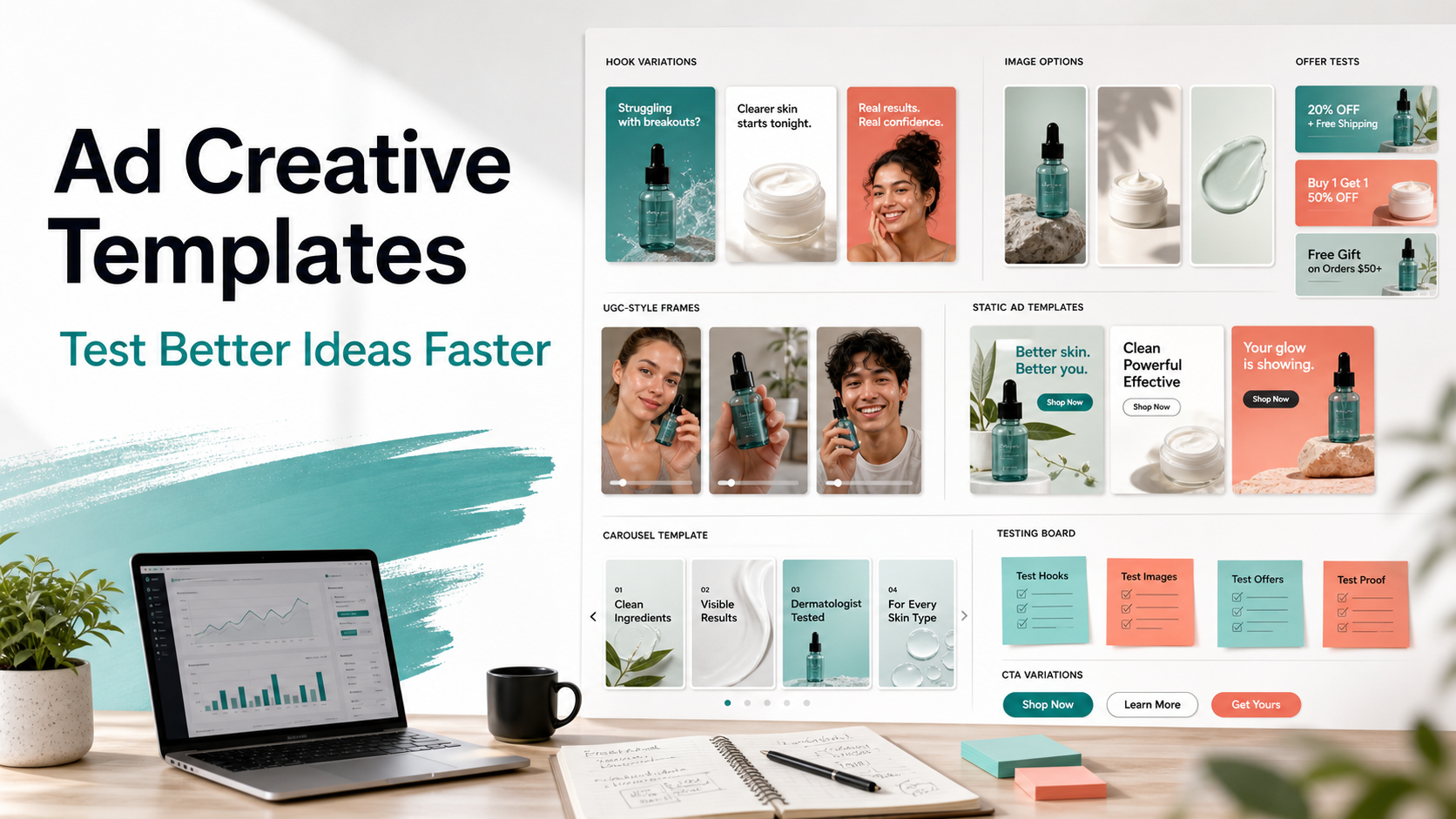
The six ad creative variables worth testing
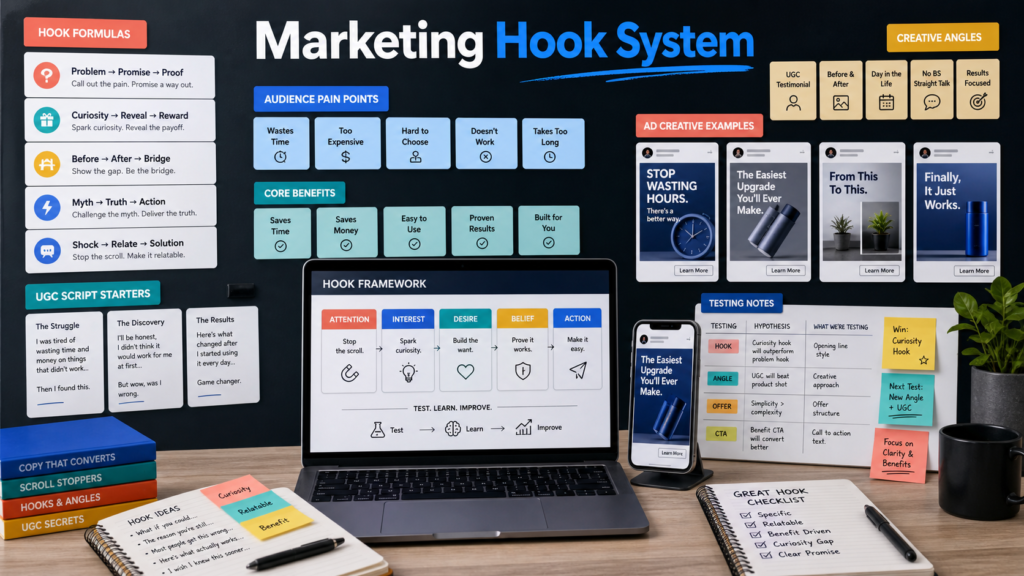
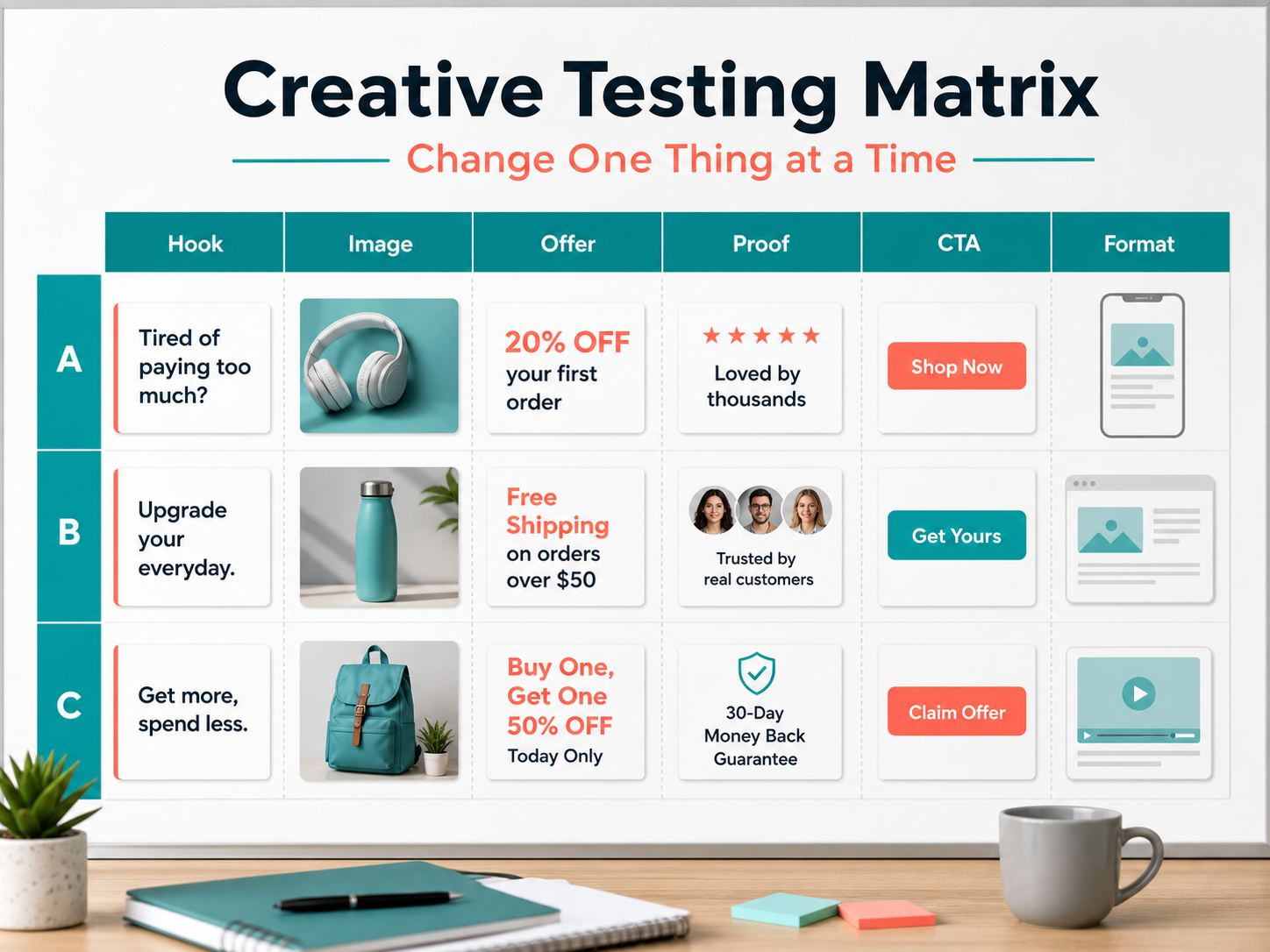
Ad creative testing is easier when you separate the variables. Instead of changing everything at once, plan variations around hook, visual, offer, proof, CTA, and format. That makes review more useful even when performance depends on audience, budget, landing page, and timing.
| Variable | Example variation | What it helps you learn |
|---|---|---|
| Hook | Problem-first vs outcome-first | Which opening earns attention |
| Visual | Product mockup vs lifestyle image | Which image explains the offer |
| Offer | Discount vs bundle | Which incentive is clearer |
| Proof | Review vs feature list | Which trust cue helps |
| CTA | Shop now vs view templates | Which action feels natural |
| Format | Static vs carousel | Which structure fits the message |
Build a creative testing matrix without losing control
Use one row per variation and record exactly what changed. If you need editable layouts for those tests, combine this with Canva templates for ads or broader digital marketing templates planning.
Ad creative examples by angle
| Angle | Headline | Supporting copy |
|---|---|---|
| Problem | Still rebuilding every promo from scratch? | Start from editable ad layouts and customize the message. |
| Outcome | Create cleaner campaign visuals faster | Use structured templates for offers, proof, and CTAs. |
| Proof | A clearer template makes the offer easier to scan | Test proof-led creative against benefit-led creative. |
| Comparison | Blank page or campaign-ready layout? | Choose the faster starting point for your next ad set. |
How to review creative before launching
- Can a new viewer understand the offer in a few seconds?
- Does the image match the landing page?
- Is the CTA specific?
- Is the claim defensible?
- Is only one major idea competing for attention?
Testing mistakes ad templates can help prevent
Templates help most when they create consistency across variations. They cannot make a weak offer strong, and they should not be described as guaranteed to convert. Use them to make testing cleaner and production faster.
Using AdCreativeKit for structured creative variation
AdCreativeKit can help you create multiple ad concepts while keeping layout and visual hierarchy organized. It connects well with social media post templates for business when organic content reveals angles worth testing.
How to plan variations without creating chaos
Creative testing gets messy when every version changes the headline, image, offer, color, and CTA at once. Keep a simple log. Name the control creative, then create variations that change one main idea. This makes the result easier to interpret, even when outside factors influence performance.
| Variation | Change | What stays the same |
|---|---|---|
| A | Problem-first hook | Image, offer, CTA |
| B | Benefit-first hook | Image, offer, CTA |
| C | Review proof | Offer, CTA, layout family |
| D | Bundle offer | Audience, product, placement |
Creative review questions before spending budget
- What is the one message this ad should communicate?
- Can the viewer identify the product or offer quickly?
- Is the claim true and supportable?
- Does the CTA match the next page?
- Would this creative still make sense if the viewer has never heard of the brand?
How templates help creative teams move faster
Templates reduce repetitive layout decisions so the team can spend more energy on the offer, hook, and proof. They are especially helpful when a campaign needs several sizes, audiences, or angles in a short window. The template supplies structure; the marketer supplies the reason to care.
How to connect ad creative templates to landing pages
The best ad creative still needs a matching post-click experience. If the ad promises a template bundle, the landing page should show the bundle. If the ad leads with a specific pain point, the page should address that pain point quickly. A mismatch makes the campaign feel less trustworthy.
Before launching, compare the ad headline, visual, CTA, and landing-page hero. They do not need to be identical, but they should clearly belong to the same promise. This simple review catches many problems before budget is spent.
Ad Creative Variable Map
Ad creative templates should focus on controlled variation. This page is the creative testing hub: hooks, visuals, offers, proof, CTAs, formats, and landing-page alignment. It should link to format-specific pages instead of trying to replace them.
| Variable | Question it tests | Supporting page |
|---|---|---|
| Hook | What earns attention? | UGC script templates |
| Image | What visual explains the product? | Product image ad templates |
| Proof | What makes the claim believable? | Customer testimonial templates |
| Offer | What makes the action worth it? | Promotional templates |
| Format | Which structure fits the message? | Static vs UGC test |
From Creative Brief to Test
Start with the creative brief template, define one creative variable, then record the test in the ad testing matrix. The template should make it easy to change one meaningful thing while keeping the rest of the ad stable.
Creative Naming Convention
Name assets by campaign, format, variable, angle, and version. For example: launch-static-hook-benefit-v1 or retargeting-ugc-proof-price-v2. This makes performance analysis easier because the asset name tells you what was being tested.
Creative Learning Loop
After each test, document the winning variable and the next question it creates. If a hook wins, test proof next. If a product image wins, test offer framing next. This turns templates into a learning system rather than a one-time production shortcut.
Review those learnings monthly so the next creative batch starts from evidence, not memory or opinion.
FAQ
What are ad creative templates?
Ad Creative Templates are reusable layouts, briefs, copy structures, or campaign assets that help you create marketing material faster while keeping the message organized. The best templates still need your audience, offer, brand style, and final review.
Are ad creative templates worth buying?
They can be worth buying if they save production time, match your campaign goals, and are flexible enough to edit. Avoid packs that only look attractive in previews but do not provide useful structures for real offers, proof, CTAs, and channel requirements.
Can I use the same template on every platform?
Usually not without adjustment. Different channels crop images differently, use different dimensions, and reward different reading behavior. Use the template as a starting point, then check placement previews, mobile readability, file type, and any current platform requirements.
How do I avoid making templates look generic?
Replace more than colors and logos. Rewrite the hook, use real product or brand imagery, remove unnecessary decoration, choose a specific CTA, and create a few variations for different audiences or offers.
Conclusion
The best ad creative templates make campaign work clearer, faster, and easier to repeat. Use them as structured starting points, keep the message specific, check current platform requirements, and connect each asset to a real campaign goal before publishing.